Explore Crisil, a company of S&P Global
Formerly known as Global Research & Risk Solutions
May 08, 2025
 Blog
Blog
Blog
 Share
Share




As private credit solidifies its role in institutional portfolios, asset-backed finance (ABF) is emerging as a powerful growth lever. Against a backdrop of higher interest rates, tightening bank regulations, and growing demand for collateralized, income-oriented investments, ABF offers a differentiated approach. It addresses borrower needs in asset-intensive sectors while delivering attractive, risk-adjusted returns for investors.
Why ABF is gaining ground
Several structural shifts are making ABF more relevant than ever. Regulatory constraints-particularly from Basel III and IV-have restricted banks' ability to provide capital-intensive loans across sectors like shipping, aviation, and supply chain finance. At the same time, investors are seeking strategies that combine yield with capital preservation.
The global private credit market has grown to over $1.7 trillion in assets under management as of 2023, with specialty finance gaining prominence as an uncorrelated return stream. In the U.S., the specialty finance pool is estimated at $5.5 trillion, yet private lenders still account for less than 5% of this market. This presents a significant opportunity for non-bank credit providers to fill the gap left by traditional lenders.
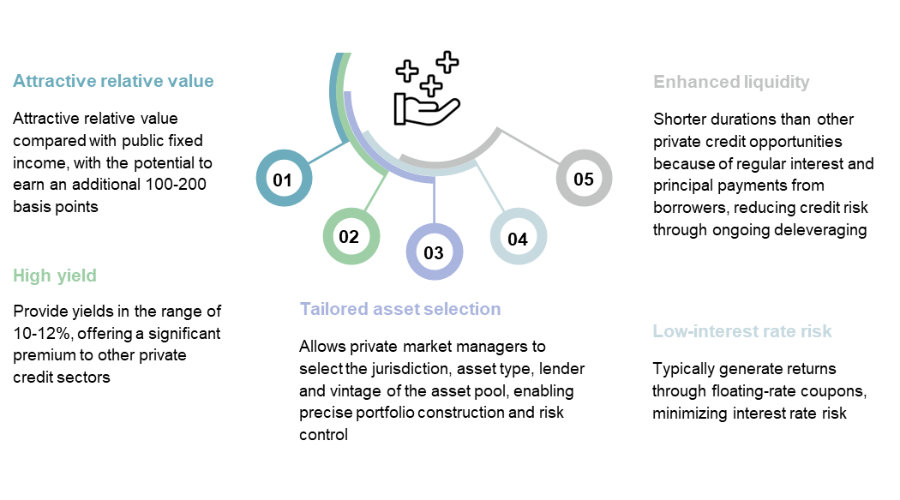
Floating-rate yields in ABF typically range between 10–12%, offering a 100–200 basis point premium over traditional corporate lending strategies. These yields are accompanied by stronger downside protection through asset security and structured credit enhancements.
The ABF landscape
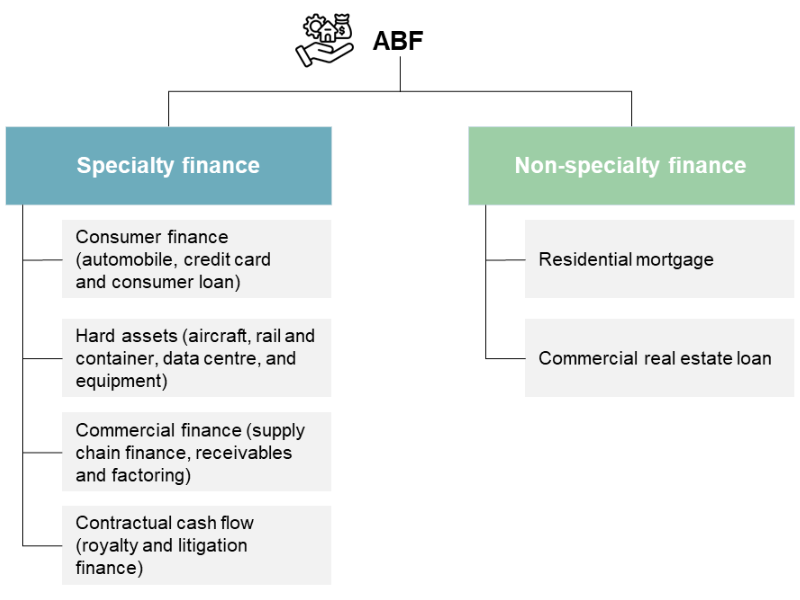
ABF structures can be broadly divided into two categories:
Specialty Finance, which includes:
- Consumer credit products such as auto loans, credit cards, and personal finance.
- Hard asset lending across aircraft, shipping containers, equipment leasing, and data centers.
- Commercial receivables, factoring, and supply chain finance.
- Contractual cash flows such as royalty streams (e.g., in music and pharmaceuticals) and litigation finance.
Non-Specialty Finance, comprising more traditional asset-backed exposures like residential mortgages and commercial real estate loans, where securitization structures are already mature.
In specialty finance, the sourcing of asset pools and underwriting quality are critical. Investors with sector expertise and longstanding relationships with originators are better positioned to access higher-quality deals and structure vehicles with more favorable terms.
Key features of ABF
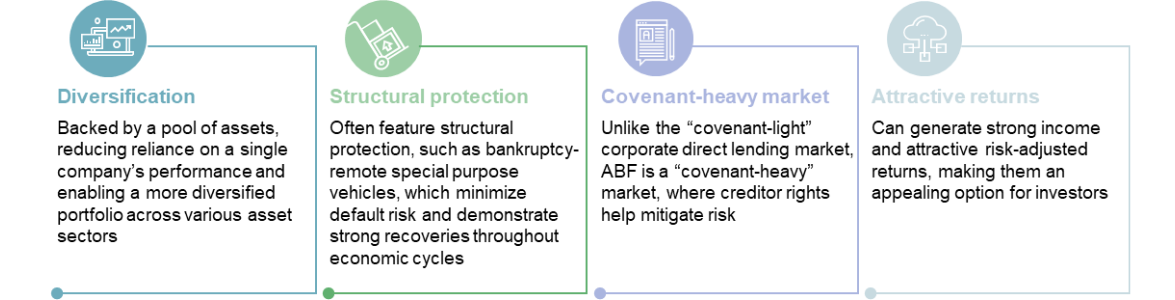
ABF investments are inherently diversified, as they are backed by pools of performing assets across industries. This structure reduces exposure to any single borrower or sector and is well aligned with regulatory frameworks like Solvency II or NAIC guidelines, which favor risk-dispersed portfolios.
Structural protections are another differentiator. Bankruptcy-remote special purpose vehicles (SPVs), first-loss reserves, overcollateralization, and performance triggers provide robust credit enhancement. These design features allow senior tranches to withstand defaults and economic volatility while protecting investors' principal.
ABF also stands out as a covenant-heavy market. Unlike many direct lending transactions that are covenant-lite, ABF structures embed creditor rights and operational triggers that allow for proactive risk mitigation in the event of borrower distress.
In terms of performance, ABF vehicles have generated net internal rates of return (IRRs) between 11–13% in well-managed vintages-compared to 8–10% in traditional middle-market corporate credit. Furthermore, most ABF structures use floating-rate coupons indexed to SOFR or LIBOR equivalents, making them more resilient in rising rate environments.
What sets leaders apart
One of the most important elements of success in ABF is access. High-quality assets are typically originated through bilateral relationships, not syndicated broadly. Firms with long-standing partnerships with servicers, originators, and banks are able to access deals with better collateral quality and more favorable pricing.
Another key differentiator is data infrastructure. Firms that invest in real-time loan-level monitoring and surveillance systems gain a decisive edge in asset selection, risk management, and reporting. This is especially true in markets where asset performance is idiosyncratic or sector-specific, such as litigation finance or aircraft leasing.
Reputation and track record also matter. Investors and allocators increasingly seek managers with back-tested portfolios that have demonstrated resilience through market cycles. In a competitive landscape, a proven ability to underwrite and manage specialty assets serves as a moat against new entrants.
Outlook and Growth Drivers
ABF is poised for sustained growth over the next five years. Several drivers are contributing to this momentum:
- The retrenchment of traditional banks from asset-heavy lending is creating significant supply-side gaps.
- Non-bank lenders, especially those backed by private capital, are stepping in to fill this void with greater flexibility and higher risk appetite.
- The rise of digital platforms for origination, risk scoring, and asset monitoring is reducing execution friction and enabling institutional scalability.
- Global managers, such as Apollo, KKR, and Blackstone, have launched or expanded ABF-focused sleeves within their private credit franchises, signaling strong institutional demand.
- Market forecasts suggest a compound annual growth rate (CAGR) of approximately 15% in the ABF space between 2025 and 2028, driven by increased adoption from insurers, pension funds, and sovereign wealth vehicles.
- Transaction sizes are also scaling up. In recent years, the market has witnessed multi-hundred-million-dollar transactions in data center receivables, container leasing, and aviation, often structured with multi-layered tranches and institutional capital stacks.
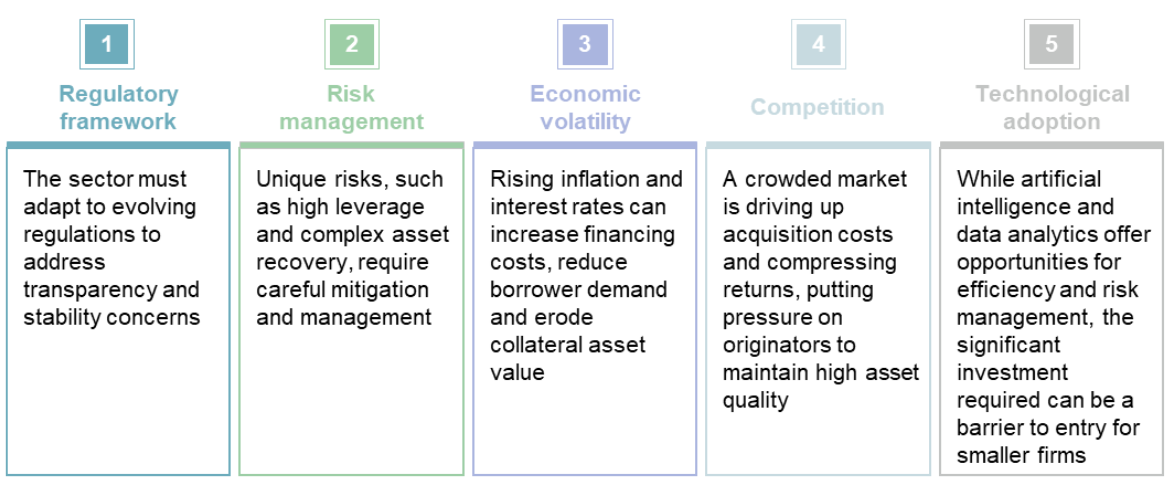
Risks and Headwinds
While ABF offers attractive features, it also presents specific challenges that require proactive management:
- Regulatory frameworks are evolving, with heightened scrutiny from entities like the SEC (private fund rules) and European AIFMD updates. Transparency and reporting standards are becoming more rigorous.
- Risk management complexity is high, particularly in niche segments where default behavior is non-linear or where recovery timelines are prolonged.
- Macroeconomic volatility, such as high interest rates or inflation shocks, can erode collateral values and reduce borrower affordability.
- Competition is compressing returns in certain high-demand segments, raising acquisition costs and pressuring origination quality.
- Technology is increasingly a differentiator, but the cost of implementing and maintaining advanced analytics platforms can exceed $500,000 annually, creating a barrier for mid-sized managers.