Explore Crisil, a company of S&P Global
Formerly known as Global Research & Risk Solutions
June 17, 2025
 Blog
Blog
Blog
Renewed charge
June 17, 2025
Blog
Blog
Sustaining the resurgence in US electricity demand will require concerted efforts
 Share
Share




Reversing course, charging ahead
Electricity consumption in the US appears to have reversed course in the past few years, after declining for decades.
Indeed, the past two decades saw growth in consumption nearly flatline - the compound annual growth rate (CAGR) dropped to 0.9% between 2000 and 2010 and to 0.2% between 2010 and 2020 - lagging growth in the country's real gross domestic product (GDP).
The decline was largely due to widespread adoption of energy-efficient technologies and policies that optimized energy consumption and reduced wastage, offsetting demand from increase in population and economic activity.
Since the beginning of the current decade, however, the trend has begun to shift, with demand now accelerating and poised for potential long-term growth.
In this blog, we delve into the factors behind the unexpected surge in energy demand and examine potential drivers of growth.
The turnaround in consumption
To be sure, growth in electricity consumption was slowing for the past seven decades, with the decline particularly pronounced in the past two decades.
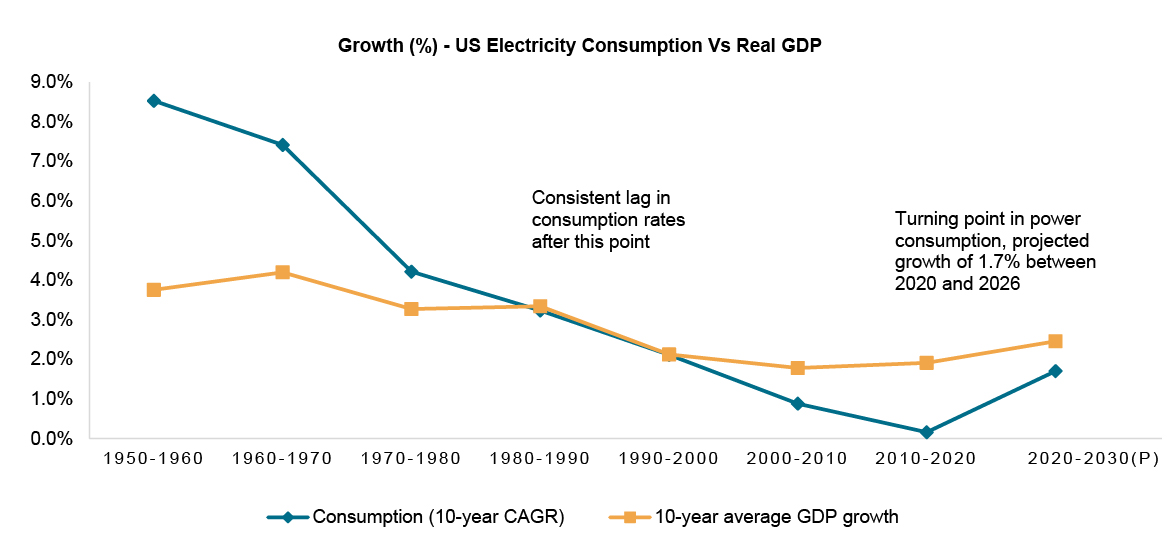
Today, riding on fundamental transformation in policy, planning, and investment strategies, the sector is poised for stellar growth in years to come.
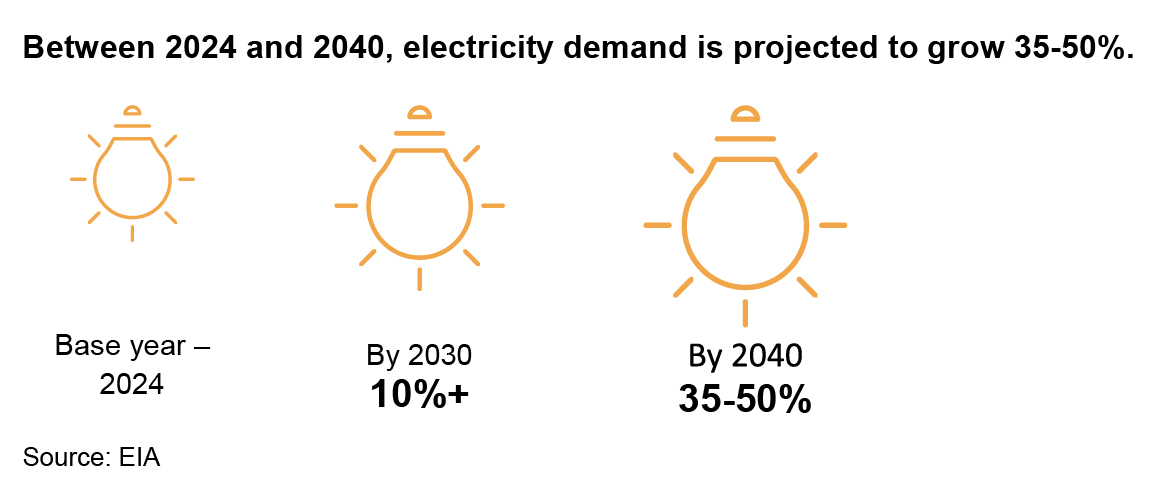
According to the US Energy Information Administration (EIA), power demand is expected to reach 4,179 bn kilowatt-hour (kWh) by 2025 and 4,239 bn kWh by 2026, compared with 4,082 bn kWh in 2024.
Between 2020 and 2026, electricity demand is expected to grow at an average annual rate of 1.7%, with the commercial and industrial sectors leading with 2.6% and 2.1%, respectively. In contrast, residential sector growth averages only 0.7% per year due to temperature-related fluctuations.
Manufacturing resurgence
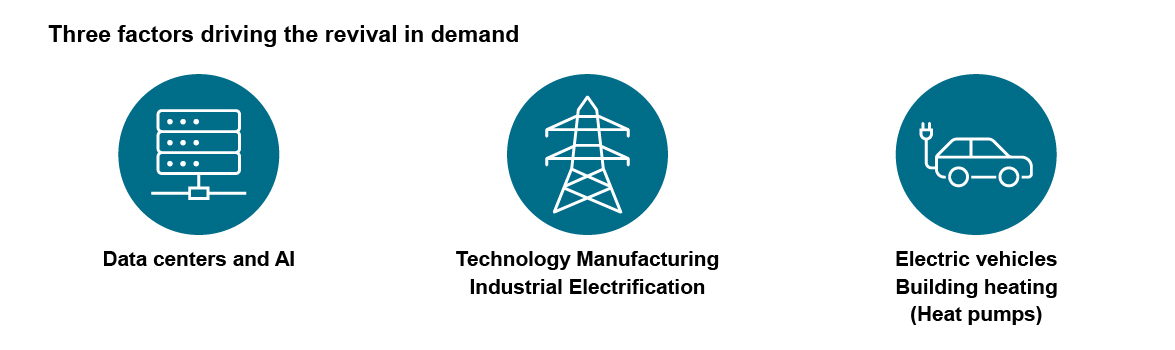
The US manufacturing landscape underwent significant transformation, driven by a shift toward building more resilient supply chains in the wake of global events such as Brexit, the pandemic, and geopolitical situation in Eastern Europe. After decades of decline, the US is experiencing a manufacturing renaissance, with companies repatriating production and reducing dependence on international supply chains, particularly in energy-intensive sectors.
Supported by government policies and incentives such as the CHIPS and Inflation Reduction Acts, this trend is expected to boost electricity demand, with Wood Mackenzie predicting that battery, solar, and semiconductor manufacturing combined, will add 15,000 megawatt (MW) of high-load-factor demand, underscoring the need for modernized grid planning and investment.

Battery manufacturing: Capacity increased over 2x since 2022 to over 200 gigawatt-hour (GWh) by 2024, driven by tax credits for producers. According to Wood Mackenzie, the US battery manufacturing capacity is expected to grow 20-fold to 650 GWh by 2030
Solar manufacturing: The sector surpassed the Solar Energy Industries Association's capacity target by 2030 five years ahead of schedule. Domestic solar module capacity grew 190% on-year to 42.1 GW by 2024, exceeding 50 GW in 2025 and now surpassing 80 GW YTD 2025. The US is now the third-largest solar module producer (behind China and India), poised for continued growth, with at least 25 GW in annual additions

Semiconductor manufacturing: The sector is poised to more than triple its capacity, the fastest growth rate globally, according to the Semiconductor Industry Association. With nine large projects underway potentially adding 3,000-5,000 MW to the grid, the sector's energy demands are significant, with a single major facility requiring up to 1,200 MW, equivalent to 15% of its host utility's peak load
Surge in data center demand
Data centers are emerging as a primary driver of rising US electricity demand, posing significant challenges for utilities, regulators, and power market participants due to their unprecedented scale and uncertain impact.
Fueled by the growth of artificial intelligence, cloud computing, and cryptocurrency mining, data centers are expanding rapidly, contributing to surging overall and peak electricity demand with their "always-on" load profile, which increases the need for baseload generation capacity and complicates grid planning.
With some large facilities consuming as much electricity as a medium-sized power plant, regions such as ERCOT , CAISO , and PJM are expected to experience significant demand-supply mismatches, with data centers accounting for up to 35% of load growth through 2040. This raises urgent concerns about grid reliability, infrastructure adequacy, and the need for new generation and transmission capacity to support the digital economy.
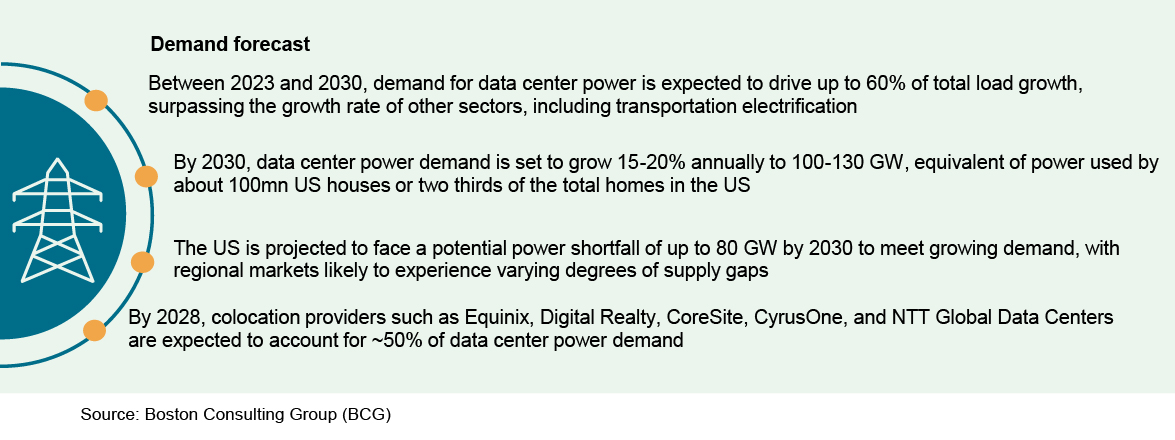
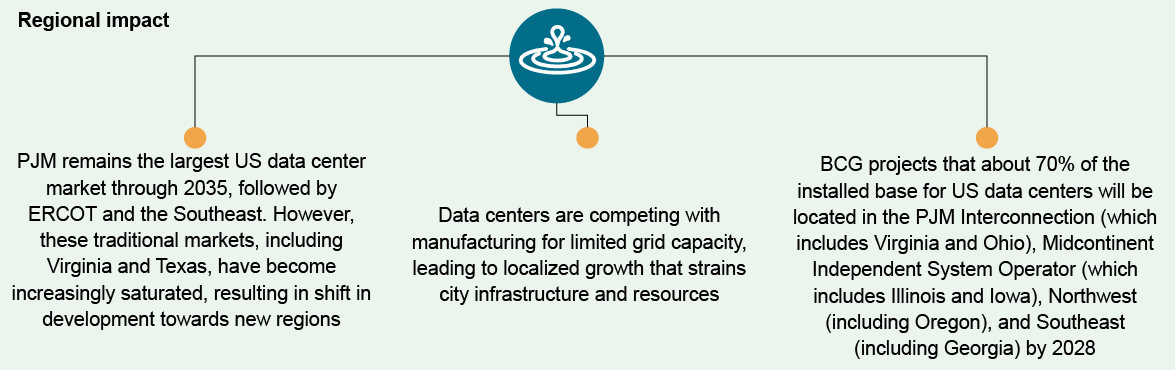
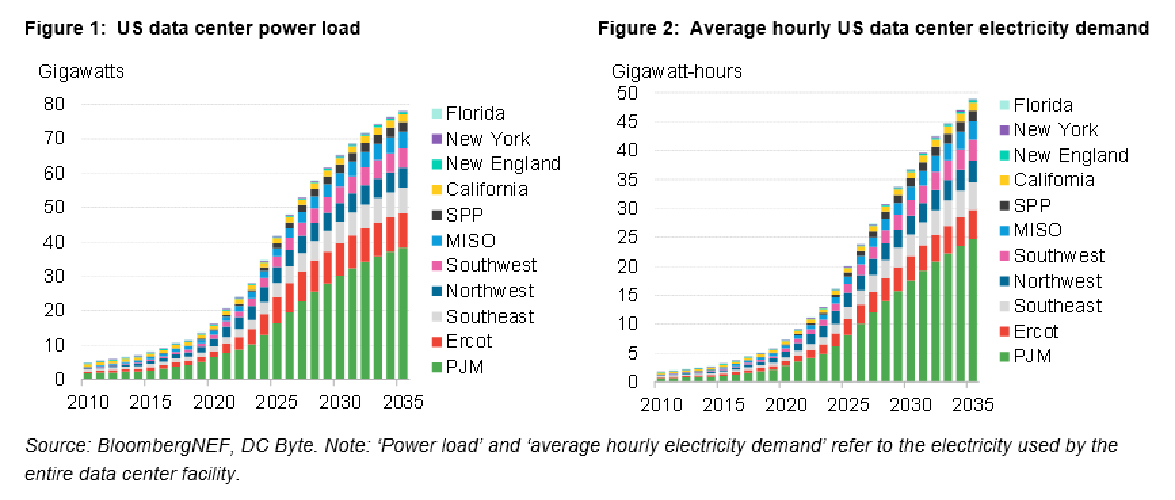
Data centers are driving unprecedented electricity demand in the US, led by rapid growth, high capital investment, and massive energy consumption. Unless utilities and regulators adapt quickly, grid constraints may become the main limiting factor for data center expansion, rather than economic potential.
Electrification of transportation and heating
Decarbonization and transition are among the demand tailwinds, driven by the electrification of heating and transportation. By 2030, regions with policies supporting electric vehicle (EV) adoption and heating electrification, such as the Northeast and West Coast, will experience significant demand growth.
EV adoption - States with proactive environmental policies and infrastructure investments, such as California, Washington, and Oregon, lead in EV adoption. Nationwide adoption is driven by state policies, charging infrastructure, and public awareness, with top-performing states often having comprehensive strategies in place to support electric mobility.
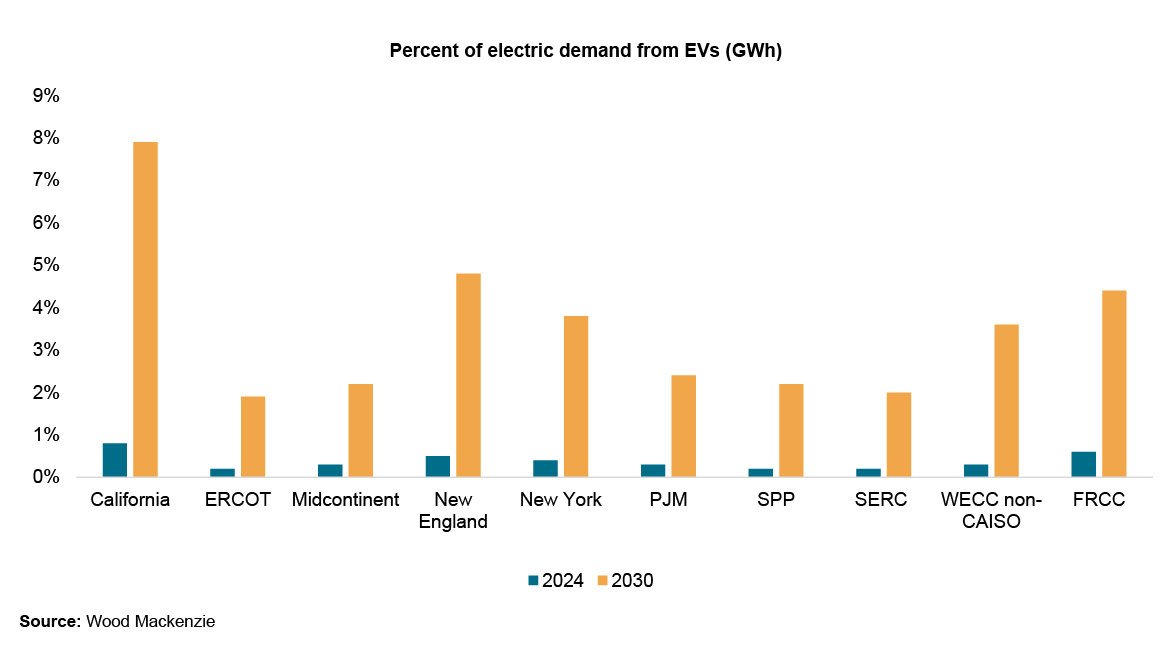
- Currently, EVs account for less than 1% of electricity demand nationwide and are estimated to rise to over 2% by 2030
- Regional policies will drive power demand levels. According to Wood Mackenzie, power demand is projected to increase to 8% in California and 3-4% in Northeast by 2030
Heating electrification - Similar to EVs, demand for electrification of heating is expected to gain traction in regions with robust policy incentives, such as the Northeast and West Coast, where the adoption of electric heat pumps will gradually replace fossil fuel-based heating systems, driving additional demand growth in these areas.
- A growing number of residential and commercial gas customers are transitioning to electric-based heating systems
- Building heating electrification is expected to reach over 150 terawatt-hour by 2040, accounting for around 3% of total energy demand
- Heating electrification is expected to be led by PJM (23%), California (21%), and the Northwest (14%), which drive the largest shares of load growth