Explore Crisil, a company of S&P Global
Formerly known as Global Research & Risk Solutions
January 28, 2026
 Blog
Blog
Blog
FRTB date set, Basel 3.1 countdown begins
January 28, 2026
Blog
Blog
Marks dusk of interpretations, dawn of industrialised execution
 Share
Share



The Prudential Regulation Authority’s (PRA) policy statement PS1/26 of January 20 signals the end of the consultation phase for Basel 3.1 implementation in the United Kingdom and the start of full supervisory accountability.
Banks now have the final implementation date—January 1, 2027—after years of countenancing near-final rules.
While the one-year deferral of the Fundamental Review of the Trading Book (FRTB) Internal Model Approach (IMA) to 2028 offers short-term relief, it also creates a more complex execution challenge.
As per the timelines set in the statement, risk leaders need to optimise the FRTB Standardised Approach (SA) capital by 2027, while demonstrating internal models continue to justify their cost and governance burden.
The challenge has shifted decisively from regulatory interpretation to industrialised execution.
Running SA and IMA parallelly
By staggering the implementation—FRTB SA in 2027 and FRTB IMA in 2028—the PRA has introduced a 12-month operational bridge that did not exist under the previous Basel regimes.
During the period, compliance with FRTB SA will be mandatory for all banks. But some banks will be actively preparing to meet the more demanding requirements of the IMA concurrent with the SA mandate. For them, this dual-track implementation could give rise to the following three immediate pressures:
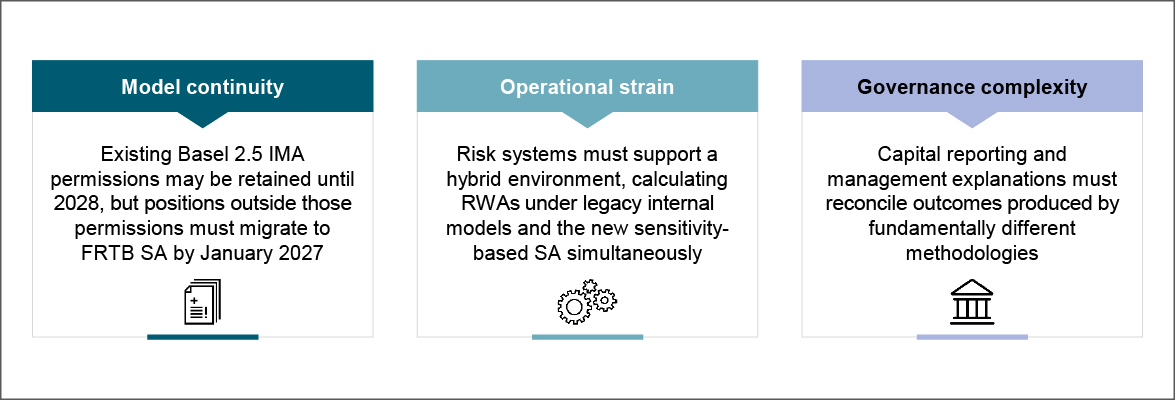
For many banks, this hybrid year will be more demanding than full go-live, as they will have to test systems, controls and organisational resilience at the same time.
Capital Optimisation Moves Centre Stage
For banks implementing the IMA, PS1/26 delivers long-awaited clarity: the 72.5% output floor is now a binding rule, not just a theoretical concept. It means that, when calculating risk-weighted assets (RWAs) using their internal models, banks must ensure the result is not lower than 72.5% of the RWAs calculated using the FRTB-SA.
In practice, this output floor sets a minimum capital requirement, ensuring modelled RWAs cannot fall too far below the regulatory benchmark.
For model-intensive investment banks, the output floor may determine capital outcomes regardless of model sophistication.
With policy uncertainty removed, RWA optimisation now focuses on explainability rather than model design. Banks can achieve optimisation by focusing on:
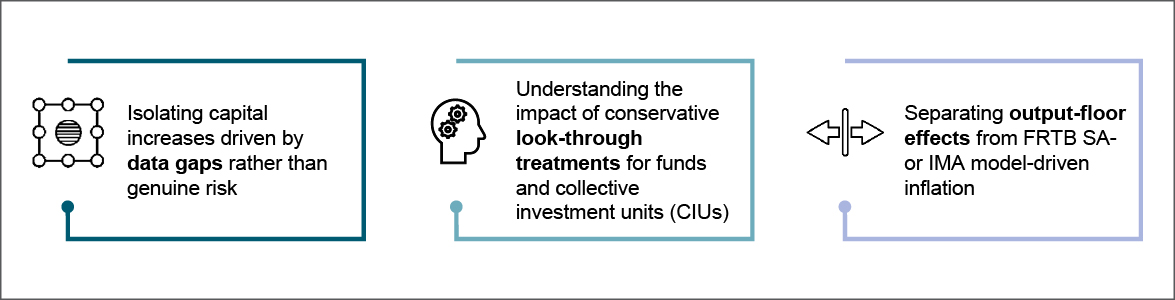
In short, capital efficiency will depend on transparent data, robust controls and credible explanations, not complexity alone.
Data is the backbone
Across credit and market risks, PS1/26 reinforces a clear supervisory message: accurate numbers are insufficient without auditability and explainability.
However, banks continue to face the following structural data challenges:
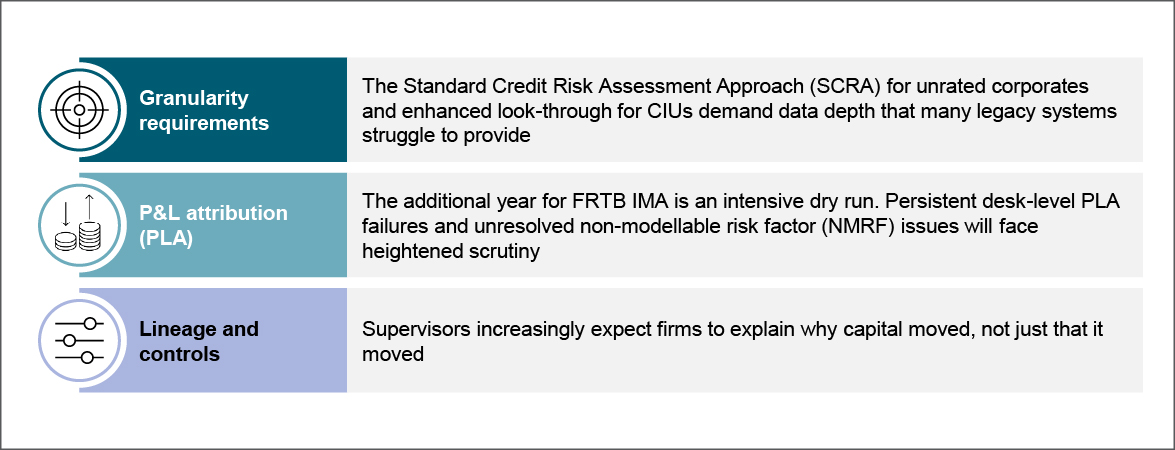
In this environment, data weaknesses quickly translate into capital and conduct risks.
Compressed timelines, parallel priorities
The milestones set by the PRA compress multiple regulatory priorities into a narrow execution window, forcing banks to build, test, explain and optimise in parallel.
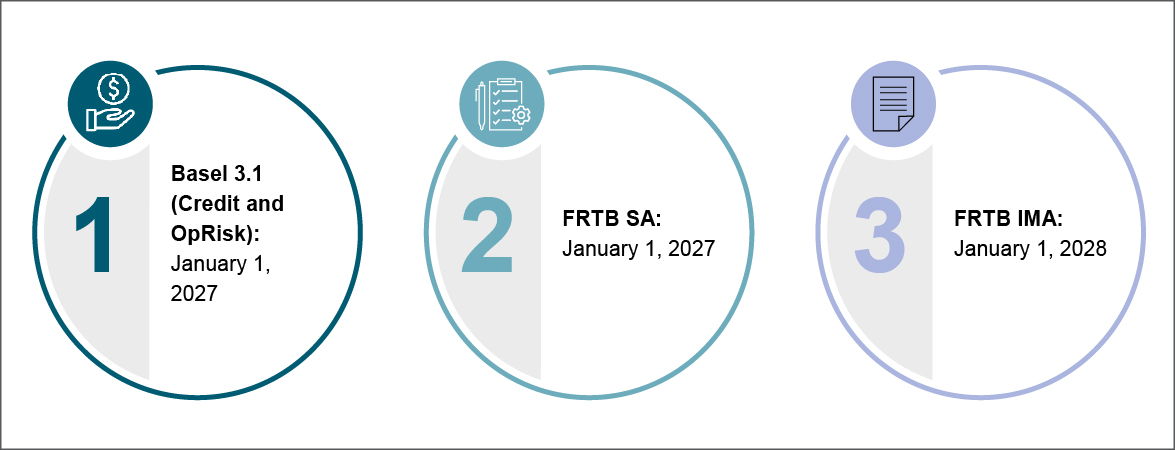
Given this, 2026 will not be a pause for risk leaders; it will be the year when they establish execution credibility.
How we support banks
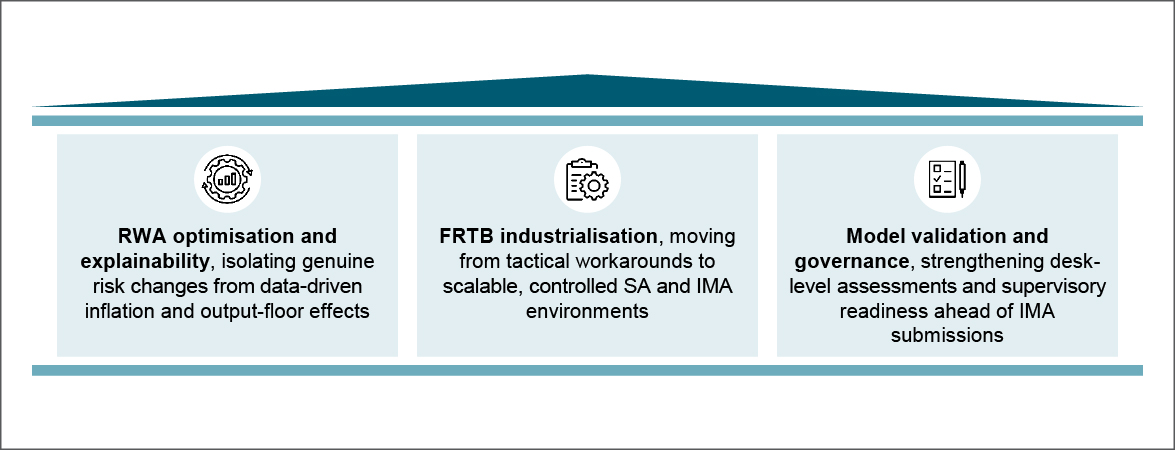
As last-mile complexity peaks, we can help banks convert regulatory certainty into capital advantage by supporting: