Explore Crisil, a company of S&P Global
Formerly known as Global Research & Risk Solutions
February 25, 2026
 Blog
Blog
Blog
From Spreadsheets to Software: A Necessary Shift in Private Credit Valuation
February 25, 2026
Blog
Blog
 Share
Share




Evolving Lending Landscape
Private credit has evolved from a niche alternative to bank lending into a diverse, significant market with a broad range of strategies and an increasingly sophisticated investor base.
As portfolios grow and deal complexity increases—spanning multiple sectors, intricate debt structures and varied sponsor types—traditional valuation methods are struggling to stay apace, underscoring the need for evolved approaches.
Many private credit portfolios still rely on valuation processes that were developed for smaller, simpler portfolios—manual monthly or quarterly updates of market data, spreadsheet-driven models and heavy reliance on backward-looking financials.
In today’s fast-paced market—defined by rapid interest rate movements, shifting credit conditions and increased fund sizes—relying on a spreadsheet-based valuation process is no longer just an efficiency issue; it introduces operational bottlenecks, structural risk and challenges in maintaining consistency across the valuation process.
Why Software Based Valuation is Necessity Now
Quarterly valuation remains the prevailing standard in private credit, driven by regulatory requirements, investor reporting standards and borrower disclosure cycles. The real challenge today is not valuation frequency alone, but the ability to execute these processes efficiently and consistently as portfolios scale.
As portfolios expand, spreadsheet-based processes lack the flexibility to apply market inputs uniformly, track evolving deal structures and maintain a timely view of portfolio risk. A dedicated software-based valuation platform addresses these execution constraints by centralizing data and valuation logic. This shift enables analysts to move from reactive, quarter-end valuations to a more ongoing assessment of portfolio risk throughout the credit cycle, providing a practical foundation for continuous valuation where deal structures or investor requirements demand it.
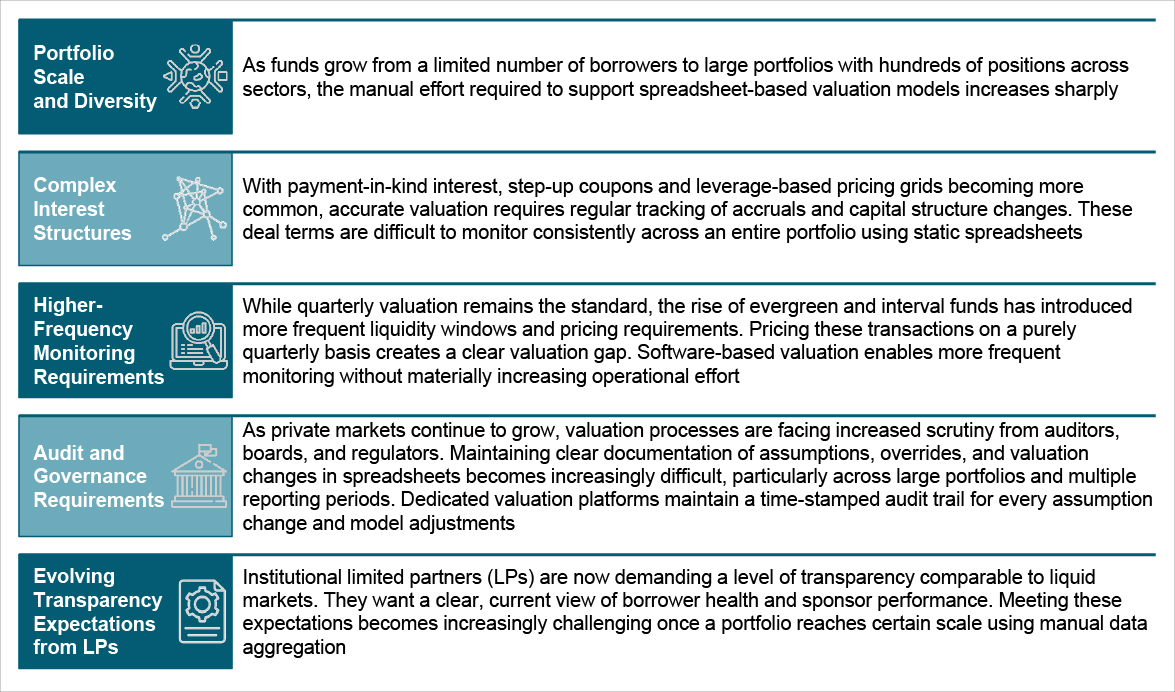
Key factors Driving the Shift
Software versus Spreadsheets: Practical Use Cases
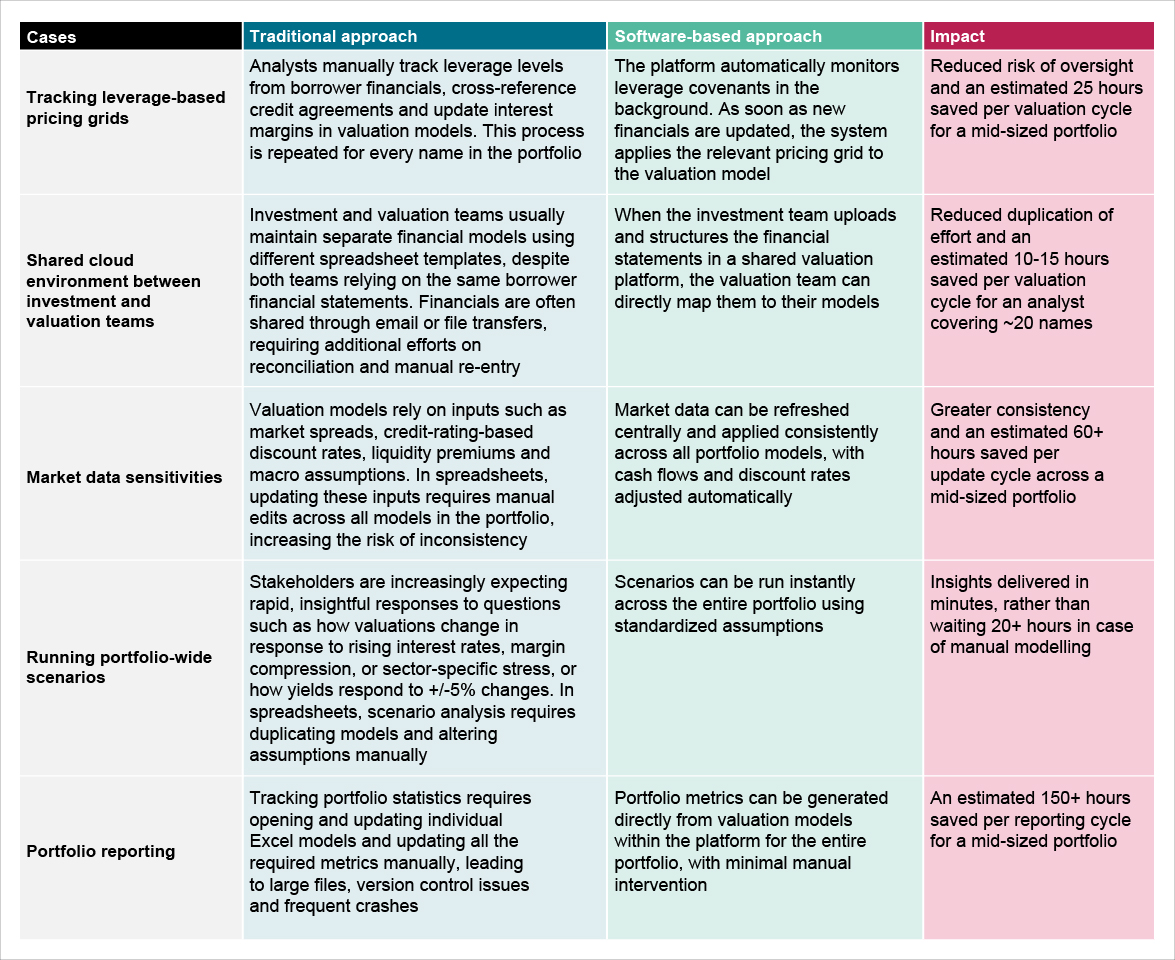
The move to a software-based approach does not just improve accuracy—it significantly reduces the manual workload for valuation teams. The time savings outlined below are indicative internal estimates based on mid-sized portfolio.
Roadblocks to Change
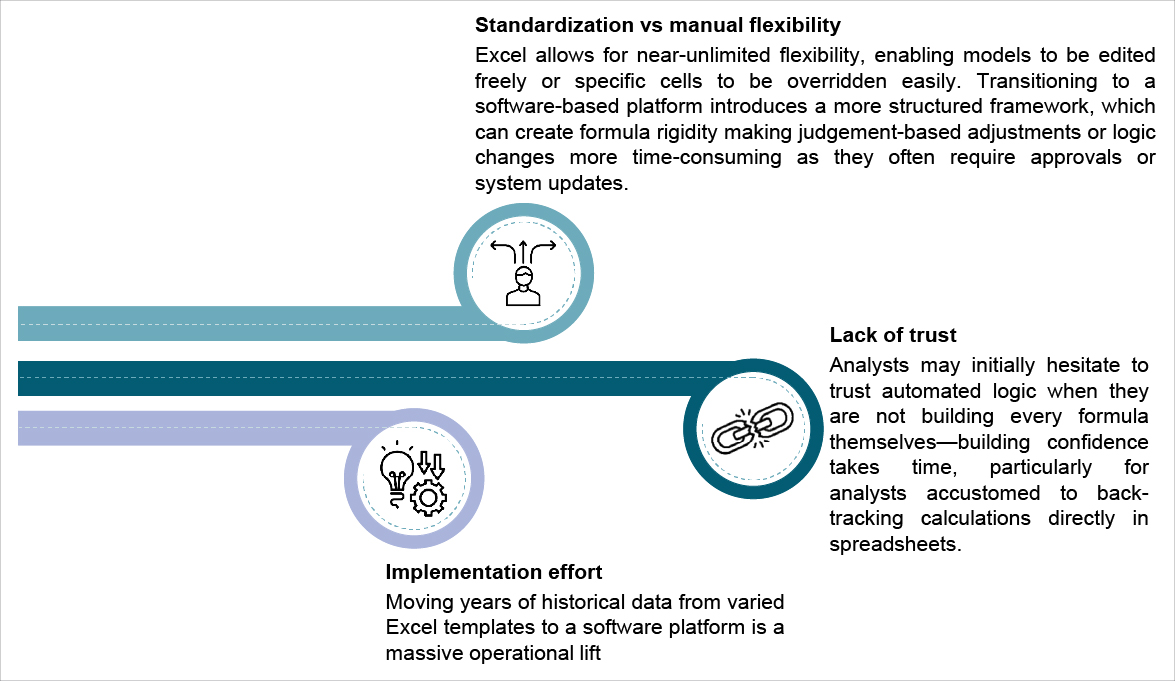
Despite the clear advantages, moving away from a spreadsheet-centric environment also presents several practical challenges: