Explore Crisil, a company of S&P Global
Formerly known as Global Research & Risk Solutions
February 19, 2026
 Blog
Blog
Blog
 Share
Share




Given an environment of low fees, rising cost-to-income ratio, evolving regulations and investor requirements, asset managers (AMs) need to transform their operating models and become future-ready to grow efficiently, while preserving their core identity and investment culture.
Generative artificial intelligence (GenAI) is a strategic tool that accelerates this transformation. According to McKinsey & Co, the global management consultant, GenAI can lower the overall cost of an AM by 25-40% on average1.
However, it is important for AMs to cut through the noise and focus on practical applications of GenAI. A structured approach with a well-defined framework can maximize the achievement of strategic objectives.
We discuss the steps that can help AMs implement GenAI-led transformation successfully:
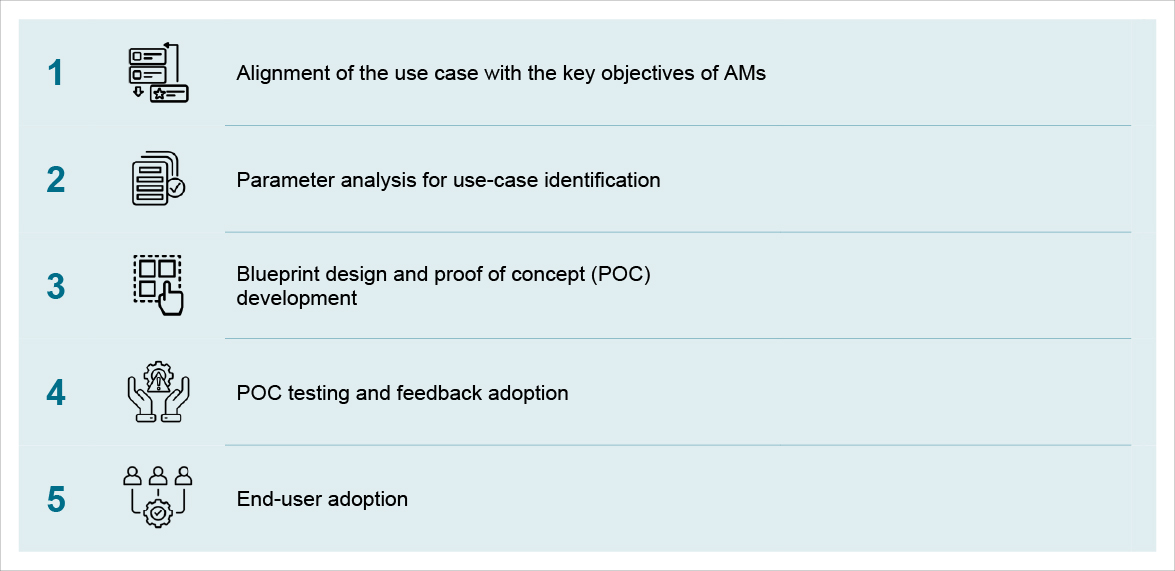
1. Alignment of use case with the key objectives of AMs
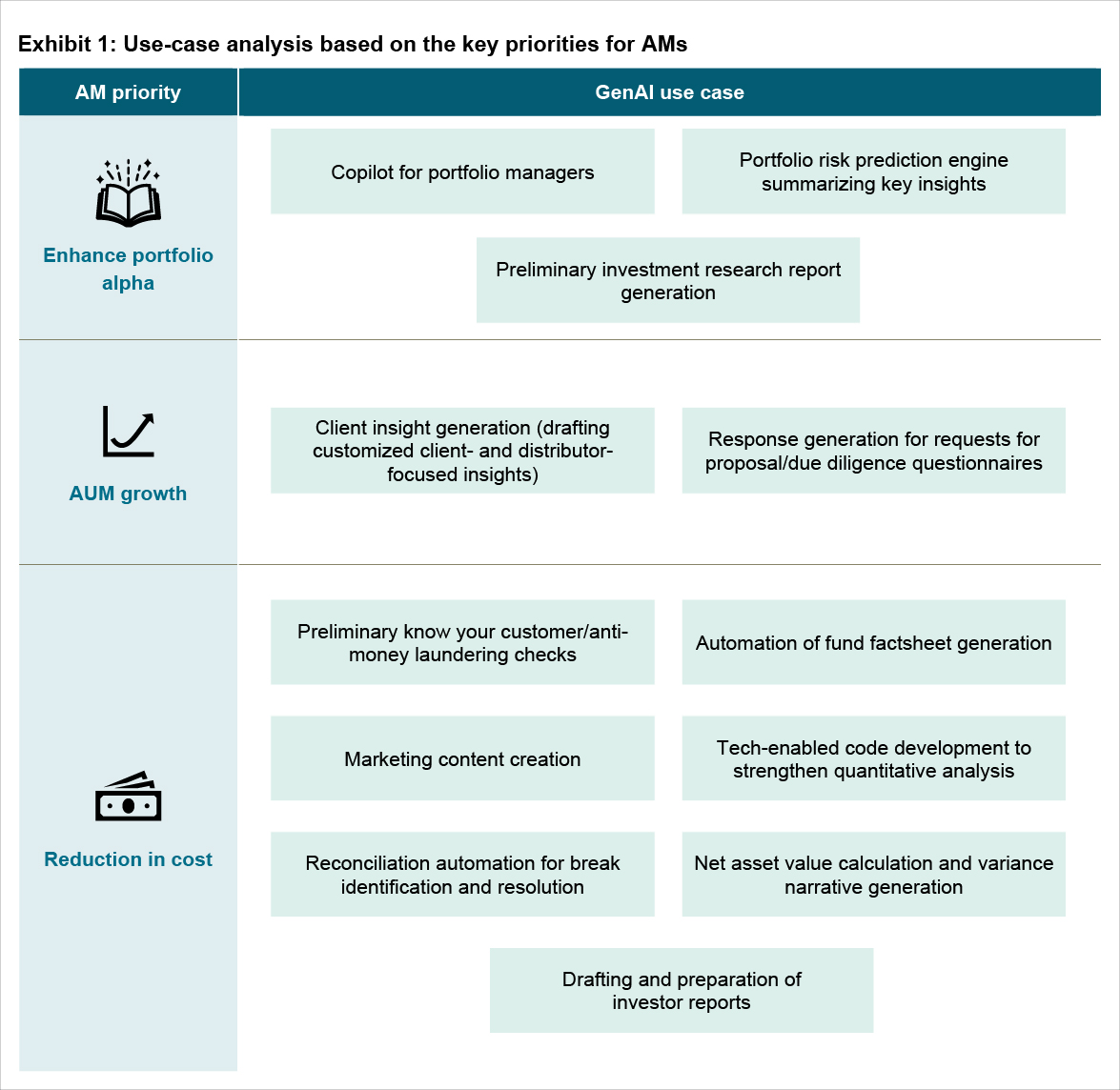
Aligning the use case with the business objectives helps AMs focus on their strategic business priorities. In a typical scenario, the key priorities for AMs today are enhancing portfolio alpha, growing assets under management (AUM) and reducing cost. Exhibit 1 highlights a potential GenAI use case for AMs aligned with these priorities.
2. Parametric analysis for use case identification
The second step is a detailed analysis of three critical parameters specific to the use case in focus: workflow analysis for return on investment (RoI) estimation, data readiness for GenAI implementation and ease of adoption by the end-user.
We explain why these parameters are crucial and provide a framework that AMs can refer to for analysis:
1. Workflow analysis for RoI estimation
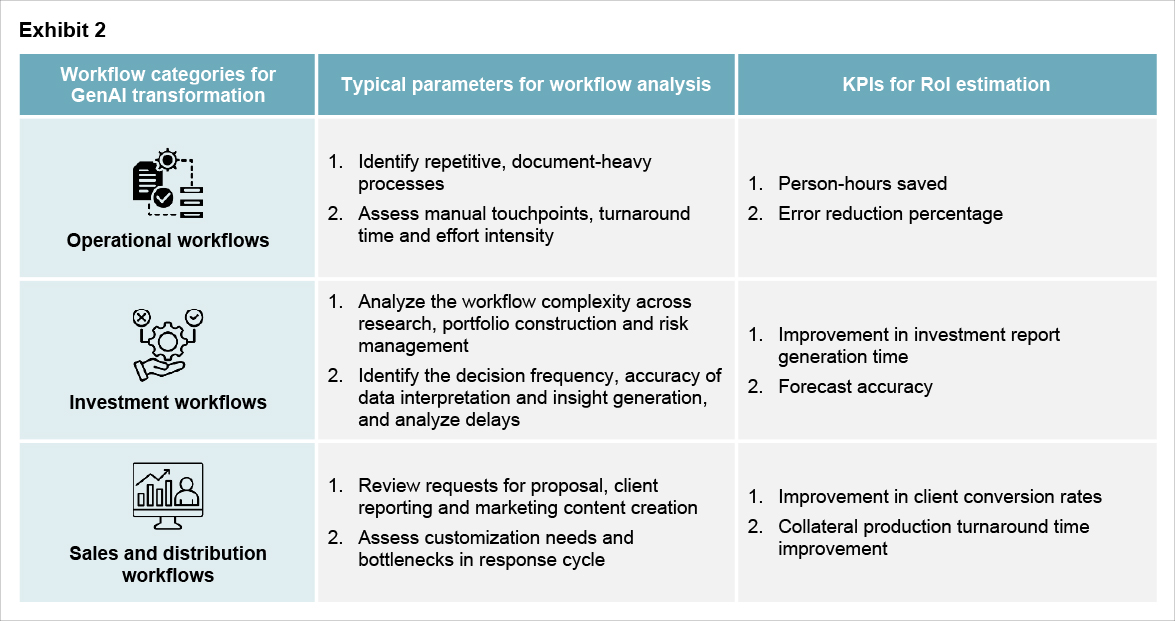
High RoI estimation gives an objective basis to prioritize a use case, but requires a comprehensive workflow analysis. This enables AMs to estimate what legs of the workflows are getting transformed and calculate RoI appropriately.
AMs must analyze workflows to assess where GenAI can generate the highest RoI. Their workflows can be categorized into three main areas (refer to Exhibit 2). For each category, AMs must evaluate the parameters that influence the workflows and identify objective key performance indicators (KPIs) to measure and analyze the RoI achieved through GenAI transformation.
2. Assess data-readiness for GenAI implementation
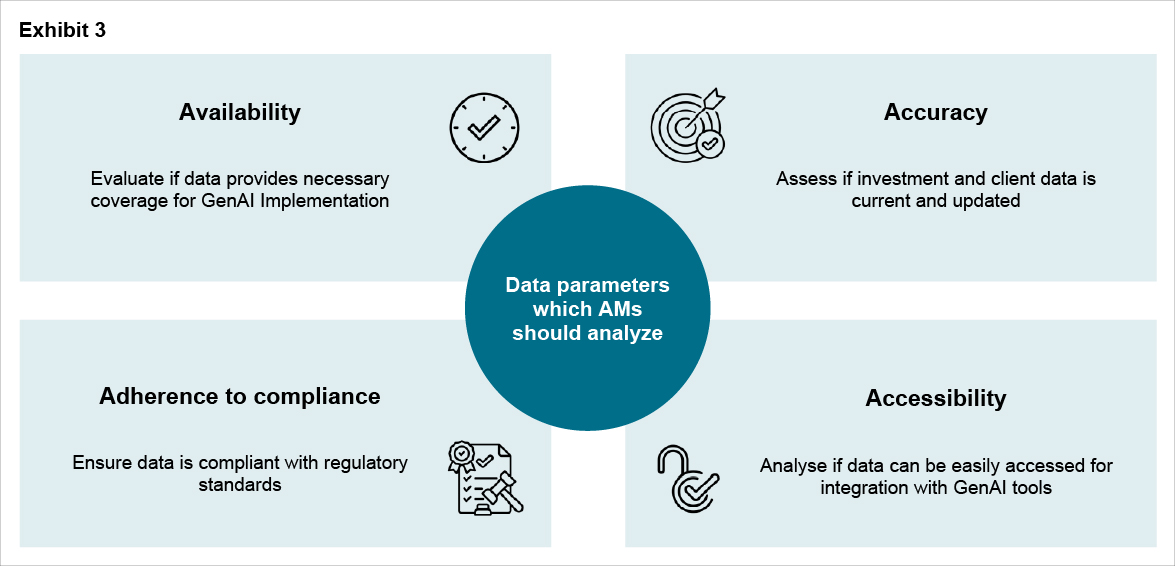
AMs tend to have data stored across multiple datasets operating in silos. They also need to ensure strict regulatory compliance. Hence, it is important to understand what data can be accessed and see if it can be leveraged for GenAI transformation. AMs should assess their data-readiness across four parameters (refer to Exhibit 3) to evaluate readiness.
3. Evaluate ease of adoption by the end-user
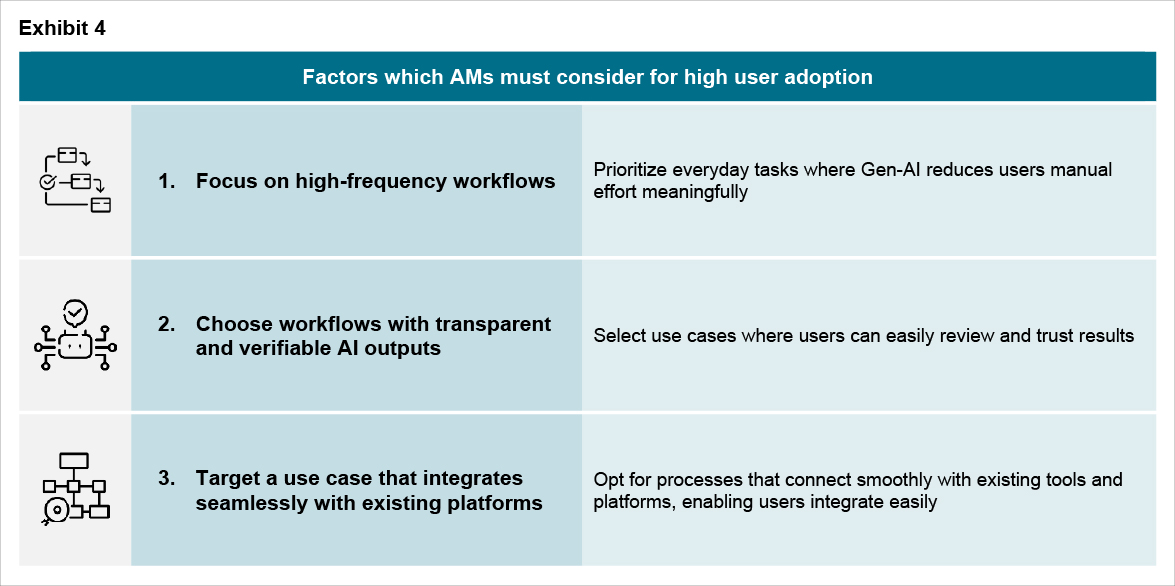
If a use case faces high resistance in adoption and implementation, it may delay the transformation process and its benefits. AMs must focus on the factors (refer to Exhibit 4) that ensure high user adoptability.
3. Blueprint design and PoC development
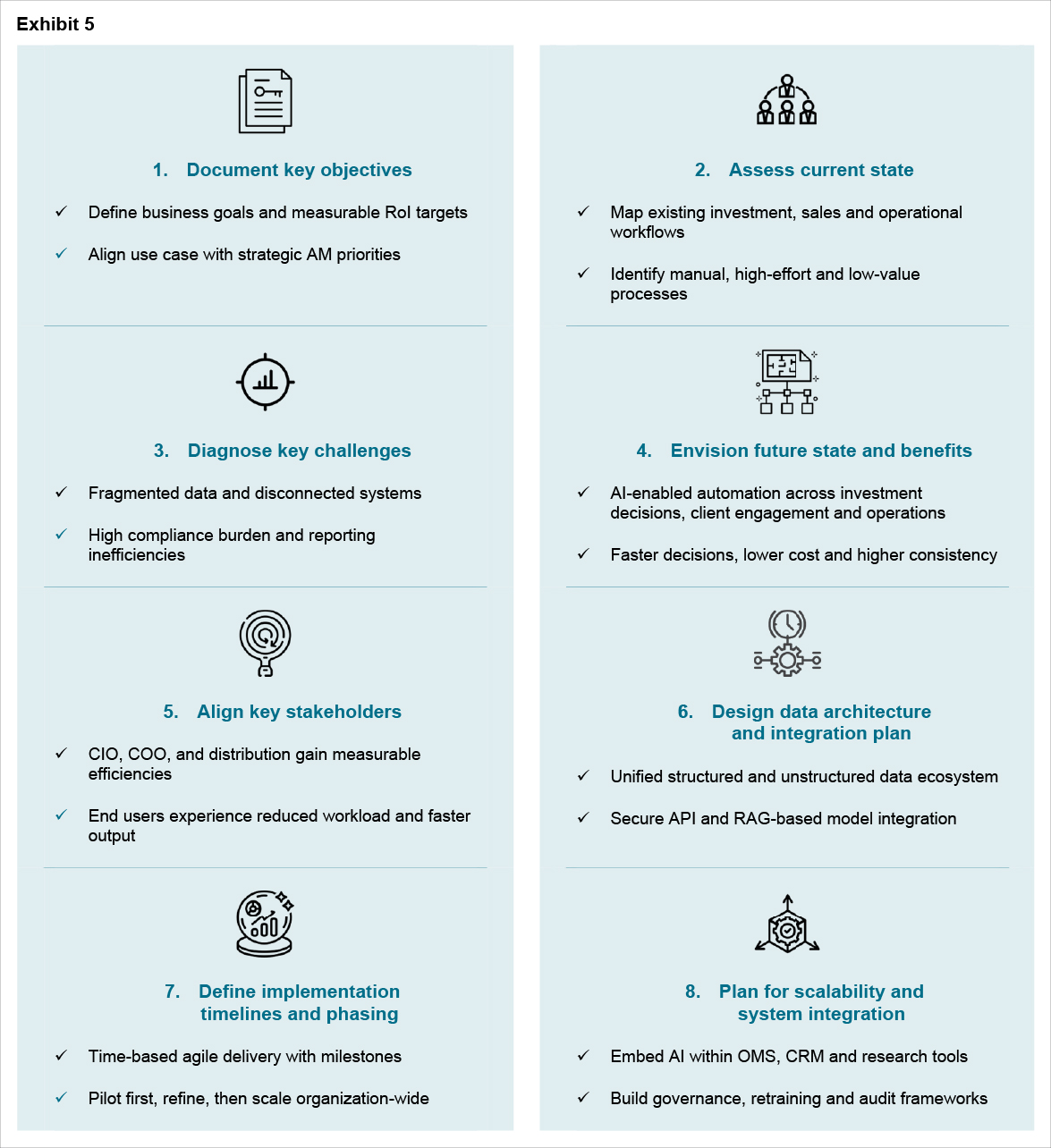
Once a use case is identified, the next step is to create a detailed blueprint followed by a PoC. A well-structured blueprint (refer to Exhibit 5) provides clarity, reduces implementation risks and ensures the PoC is built on a strong foundation. This ultimately helps AMs accelerate adoption, validate value quickly and scale up GenAI solutions confidently.
4. PoC testing and feedback implementation
The next step is PoC testing and feedback implementation. Comprehensive testing prevents unwanted results and delays, and ensures the PoC is reliable, compliant and ready for scale.
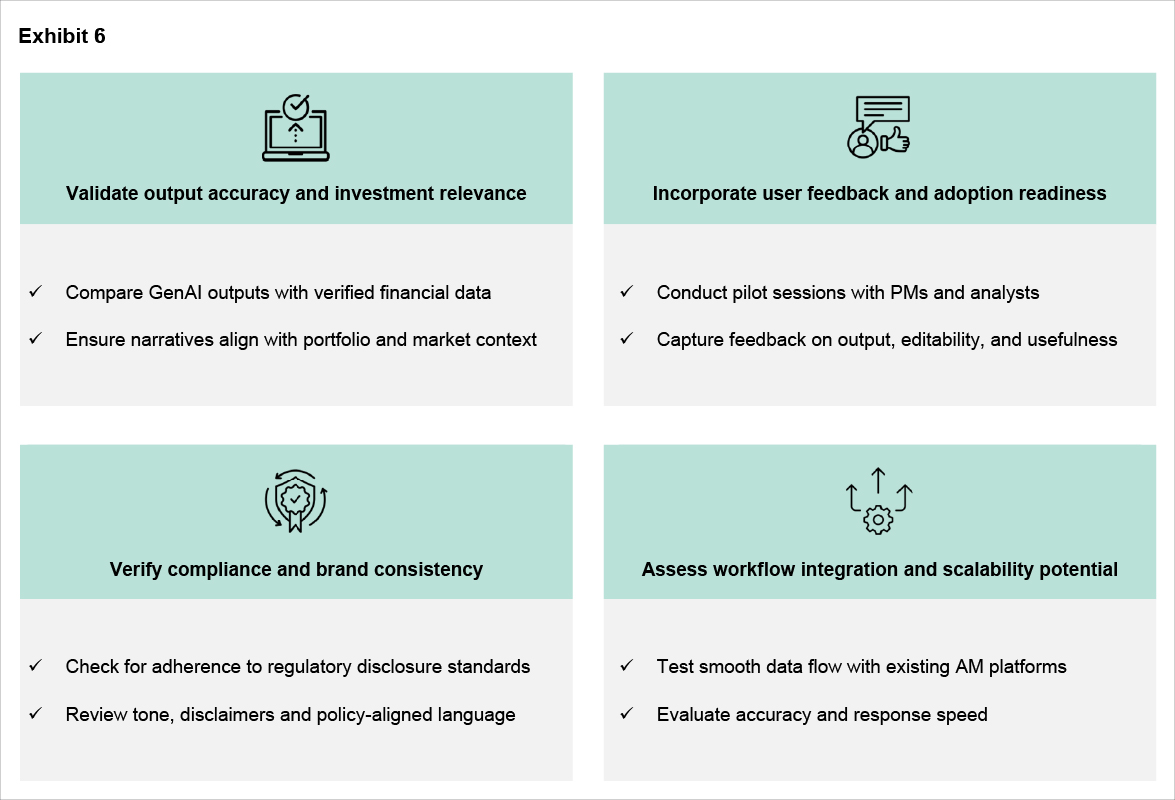
The PoC should be tested across diverse scenarios, supported by a structured prompt repository to validate performance and output consistency. Testing must evaluate accuracy, identify hallucinations, check for errors, ensure compliance with regulatory and firm-level policies, and assess ease of use for end-users.
Additionally, AMs should test data privacy adherence, alignment with investment and risk guidelines, response latency, ability to handle complex product nuances, integration readiness with existing systems, and the robustness of guardrails to prevent misuse. Below is a quick reference to the critical points for testing and feedback implementation.
5. End-user adoption
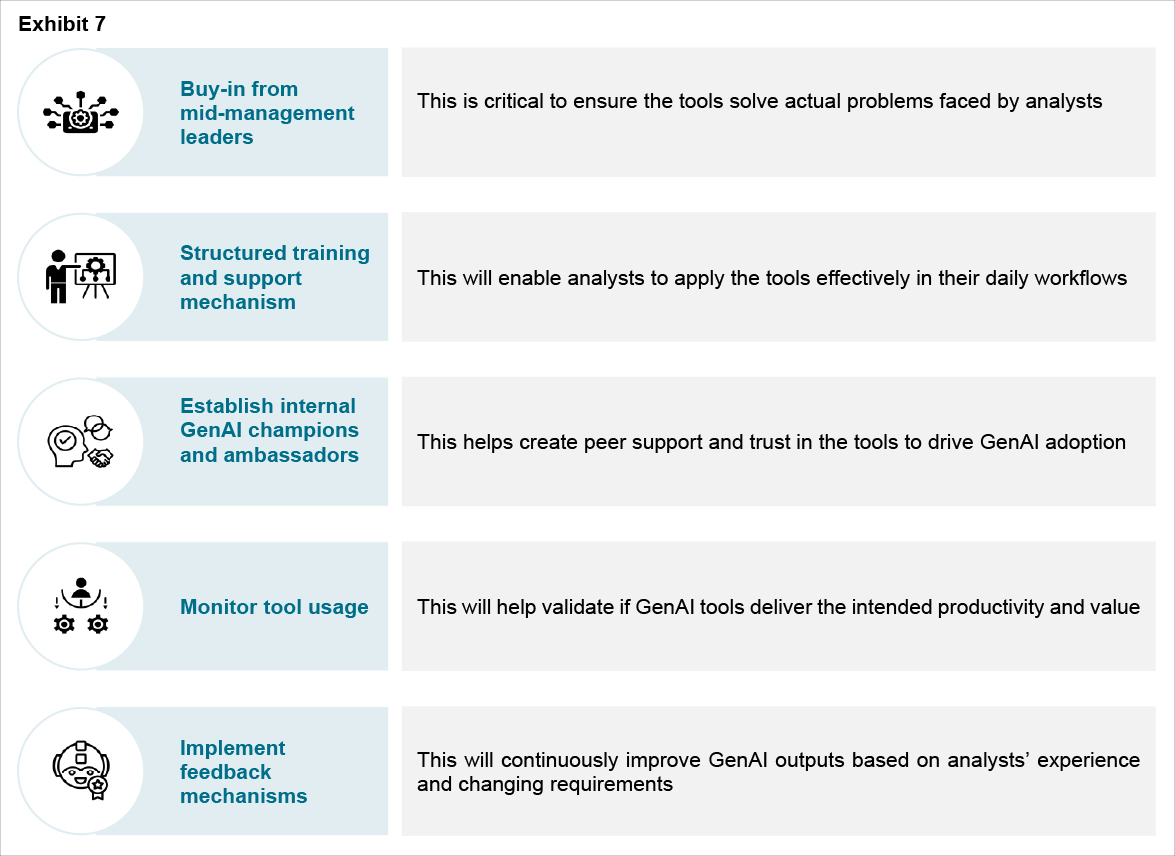
The final step is user adoption, without which even the most sophisticated models, clean data foundations and robust governance frameworks fail to make a business impact. User adoption ensures that investment teams, and sales and operations personnel integrate AI into daily workflows, enhancing portfolio insights, client engagement and process efficiency. The framework below can help firms enhance user adaptability.