Explore Crisil, a company of S&P Global
Formerly known as Global Research & Risk Solutions
February 02, 2026
 Blog
Blog
Blog
 Share
Share



The proposed reset of the European Union's sustainable finance disclosure norms aims for clarity and simplification
The European Commission's recent proposal to amend the Sustainability Finance Disclosure Regulation (SFDR), often referred to as SFDR 2.0, aims to address long-standing concerns around complexity, inconsistent interpretation and greenwashing, while making information on sustainability more meaningful and usable for investors.
The proposed amendments signal a structural shift away from a disclosure-heavy regime towards clearer product categorisation, stronger anti-greenwashing safeguards and simplified reporting.
What are the key updates
From Articles 6/8/9 to product categories
One of the most consequential changes proposed is the replacement of the current structure of Articles 6, 8 and 9 with explicit product categories. This is intended to end the market practice of using Articles 8 and 9 as de facto labels, and to bring greater clarity and comparability.
Proposed categories
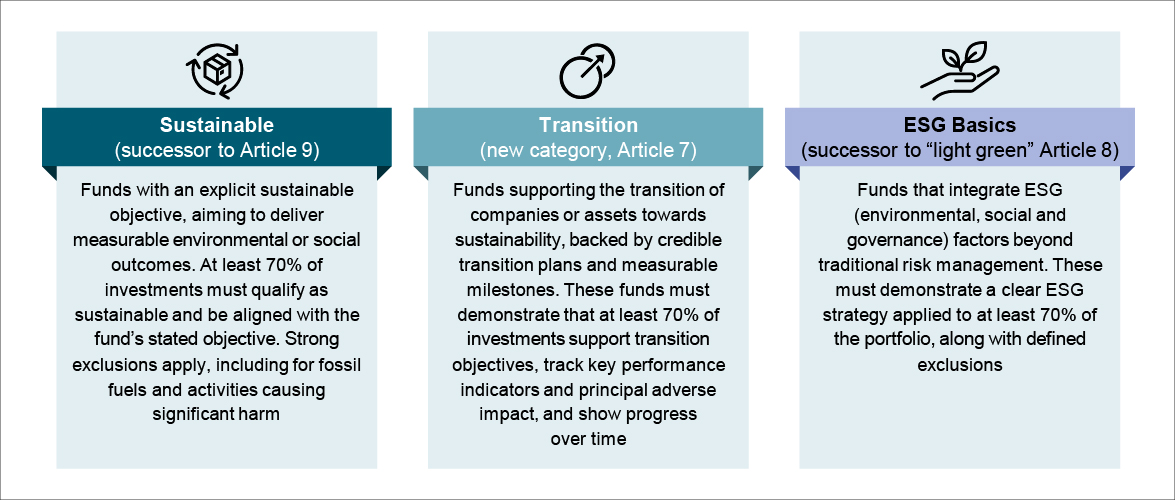
This categorisation is designed to be mutually exclusive and more rules-based, reducing the scope for subjective interpretation.
Simplified and focused disclosures
SFDR 2.0 also proposes a significant simplification of disclosures, responding to widespread industry feedback that the current framework is overly complex and not investor friendly.
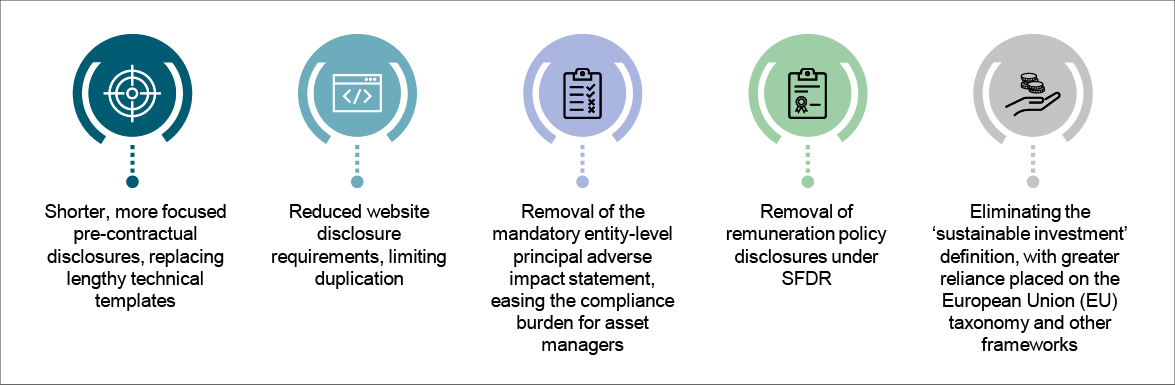
The intent is to refocus SFDR on providing decision-useful information rather than compliance-driven reporting.
Stronger anti-greenwashing safeguards
The proposal explicitly aligns SFDR with the European Union’s broader consumer protection and green claims agenda. Sustainability claims must be substantiated, consistent with the product category, and supported by portfolio alignment and exclusions. This reduces the ability to use vague ESG language for products without robust evidence.
How do these changes impact market participants
Asset managers: Reclassification and strategy reset
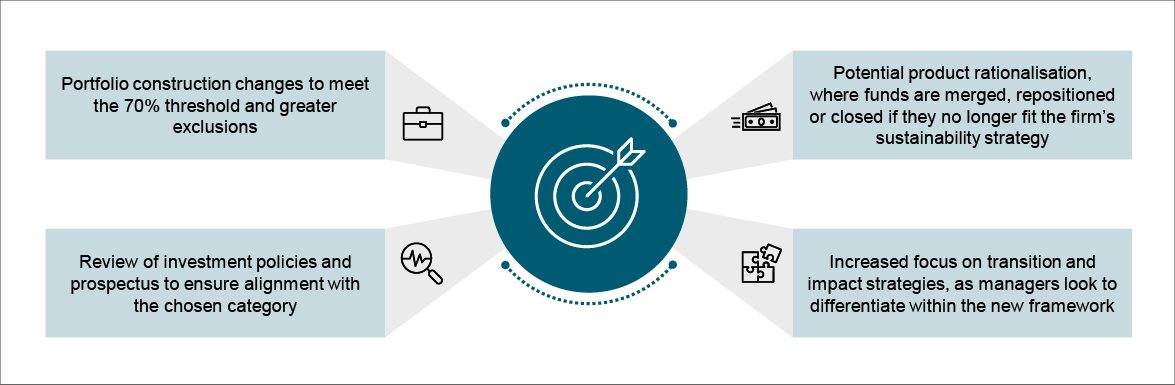
For asset managers, SFDR 2.0 is not a ‘re-label and move on’ exercise. It will require a fund-by-fund reassessment against the new category criteria. Products that do not meet the thresholds may fall into the non-classified bucket, losing their ability to be marketed as ESG or sustainability offerings.
Strategic implications
Asset owners and investors: Better signals, less noise
From an investor perspective, SFDR 2.0 aims to restore trust. By tightening criteria, removing vague definitions and strengthening exclusions, the framework seeks to reduce greenwashing and improve the credibility of sustainable products.
The clearer differentiation between sustainable, transition and ESG integration strategies should help investors better align portfolios with their values and objectives.
When do these changes come into force
SFDR 2.0 is currently in the proposal and consultation phase. Based on the European Commission's process and indicative timelines:
- A final legislative proposal is expected in 2026
- Formal adoption could follow in 2026–2027
- Implementation is likely in 2027 or 2028, with a transition period for asset managers to reclassify products and update disclosures