Explore Crisil, a company of S&P Global
Formerly known as Global Research & Risk Solutions
March 30, 2026
 Blog
Blog
Blog
Resetting performance bars for asset managers
March 30, 2026
Blog
Blog
Rationale for investment decisions becoming as important as returns themselves
 Share
Share





Evaluating asset managers by linking earnings and risk
Investors and regulators are asking asset managers to go beyond the numbers and articulate the rationale for investment decisions
The asset management business is undergoing a fundamental change as investors increasingly look beyond numbers and seek to know how these were achieved, if the investment strategies can be reused, and whether the results conform with the goals stated when setting up the fund.
While numbers are still an important metric, investors, government officials and Board members across the world are asking asset managers to modify their systems and processes to meet evolving standards.
Thus, asset managers who want to be relevant and respected in a market that values and rewards credibility in insights must demonstrate how and why investment decisions were taken and sketch the link between earnings and risk.
In the milieu, some key trends are visible already.
A 2025 Boston Consulting Group (BCG) report1 indicates the transformation has become unavoidable. Top companies are spending a lot to implement digital tools and improve the process to store and use data.
According to a PwC report2 released in 2025, asset managers now perceive artificial intelligence (AI) as an unavoidable part of their daily functions. Some of the large pension funds are strengthening the links between risk management, data collection and usage, and results.
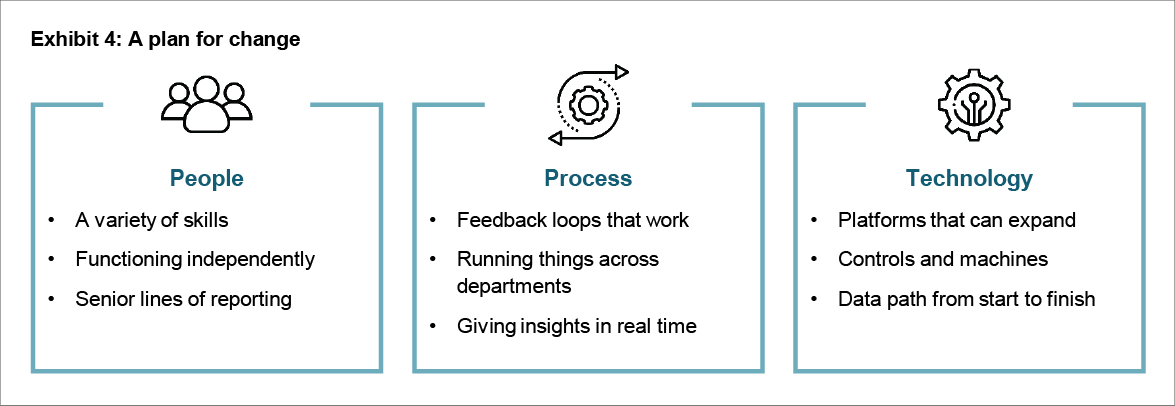
The role of performance measurement in investment management is evolving significantly. Core functions like measuring and analyzing results have always existed, but their strategic importance is growing. These functions are shifting from back-office reporting to playing a central role in investment decisions — such as portfolio construction, risk allocation, and manager selection. Expectations have grown for businesses that operate globally; numbers alone are no longer adequate. Decision-makers today want to know not just what the returns were, but also how each return was achieved. What counts is whether the results can be repeated and whether they align with the original investment objectives.
Recent research in asset management shows that significant shifts are underway. The 2025 Global Asset Management review from Boston Consulting Group (BCG) indicates that the asset management industry is at a critical turning point, where transformation is becoming unavoidable. The best companies are spending a lot of money to improve their systems with digital tools and improved ways to store and use data. According to PwC’s 2025 Global Asset & Wealth Management research, managers began to perceive AI as a key element of their everyday work that would help them stay in business in the future. Now, think about how big investment systems work. Some of the huge pension groups that run them are slowly shifting. They are recreating themselves with clearer links between risk, results, and how data travels. It’s not only the parts that count more now; it’s also how they fit together.
Data lineage: The key to trust
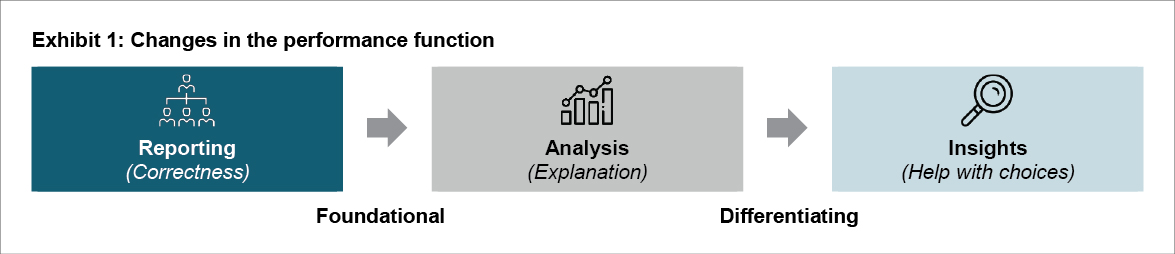
Data lineage will determine the future of performance supervision, even though the standards might differ. Regulators and institutional clients are asking more questions about the complete lifecycle of data––acquiring, checking, modifying, calculating, giving credit and reporting.
The focus is shifting from performance to processes and controls primarily because numbers are only as good as the data that is used. An input error at an earlier stage can change how attribution analysis works, casting a cloud on the results.
Here are some examples of how data quality issues can affect a firm:
Example 1: Misclassification of securities
Imagine a corporate bond being incorrectly branded as a high-yield instrument instead of an investment-grade one. This error will—again, incorrectly—give a lower risk profile and a higher risk-adjusted return to the bond. Attribution analysis will show that the portfolio manager made 15–20 basis points of alpha. But it was really just an error in the data, not proof of real skill.
The asset manager will have to cope with more than just the mistake in attribution. If this comes up during a client review or a regulatory audit, it will hurt the company’s reputation a lot. Apart from the mistake, the spotlight would be on the fact that internal controls did not flag it up. Large institutional clients will develop trust issues.
Example 2: Timing of benchmark data
Another common problem arises when a portfolio is valued at the end of the day but the benchmark data is obtained with a slight delay. This could happen when the data is obtained from a third party after a delay. On days when trading is particularly volatile, this timing mismatch can make it seem like an investment is doing better or worse than it really is.
Over time, it makes attribution analysis less reliable. Allocation effects appear overstated, selection impacts become obscured and investment teams may begin to optimize for signals that do not align with reality. Besides, governance committees will start making decisions based on an analysis that does not accurately reflect how a portfolio performs.
These problems can be remedied before they get worse by implementing strong data governance practices. Most institutional managers are going beyond the mandated Global Investment Performance Standards (GIPS) and such rules by focusing on dedicated data ownership, automated reconciliation processes and dashboards to keep track of exceptions.
Regional views: Bridging the differences
People all around the world want openness and responsibility, yet the ways these goals are reached differ from place to place.
The Securities and Exchange Commission (SEC)’s Marketing Rule has made it more vital to comment about how well things are doing in the US. People are paying more attention to hypothetical returns, back-tested techniques, gross-of-fee performance and results. Recent efforts taken to enforce the law reveal that compliance expectations are being closely scrutinized.
There are a variety of restrictions in Europe that affect how performance is reported. The Alternative Investment Fund Managers Directive (AIFMD) and the Undertakings for Collective Investment in Transferable Securities (UCITS) are in charge of keeping an eye on these products, the Digital Operational Resilience Act (DORA) is in charge of making sure they work well, and the Sustainable Finance Disclosure Regulation (SFDR) is in charge of ensuring they are environmentally friendly. Managers who work across the continent have to cope with criteria that are similar yet effect performance reporting in numerous ways.
In the Asia-Pacific, governance structures are still evolving to reach global standards. A lot of multi-asset and alternative managers are employing a business partnership approach to handle risk and performance. Regulators are focusing on more how to share performance through digital platforms.
Changes in people, processes and technology
Asset management companies need more than just system updates to deal with these changes. The best asset managers are looking to upskill people and improve processes and technology.
People: More employees need to have a mix of skills, such as knowledge of investments, analytical abilities and familiarity with data-driven models. The job of a performance analyst used to be largely about ensuring calculations were correct. Now, it requires statistical expertise, programming abilities and the ability to communicate with senior investment experts. The performance function's independence and seniority are becoming increasingly significant. Top firms are strengthening reporting lines so that investment leaders can reach them directly.
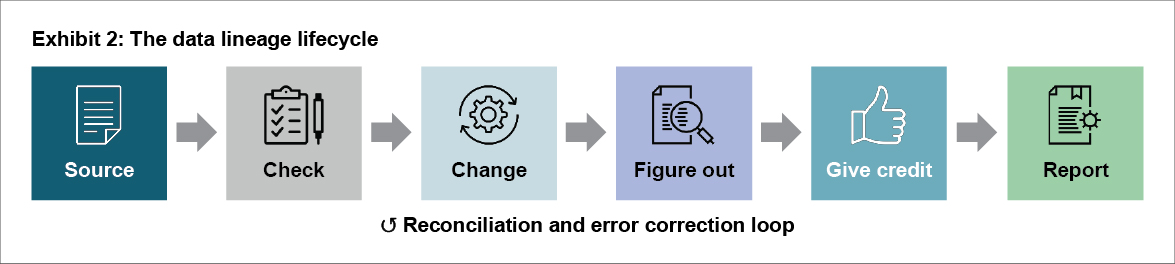
Process: Companies are moving away from static, post-mortem reporting to integrated feedback loops that connect risk assessments conducted before an event with performance attribution done after an event. The idea is to have a cycle of constant progress. Performance analysis helps uncover sources of value and risk, develop and manage portfolios and, over time, validates or challenges investment ideas. Risk, performance and investment teams need to stop working in disparate areas for this integration to be successful.
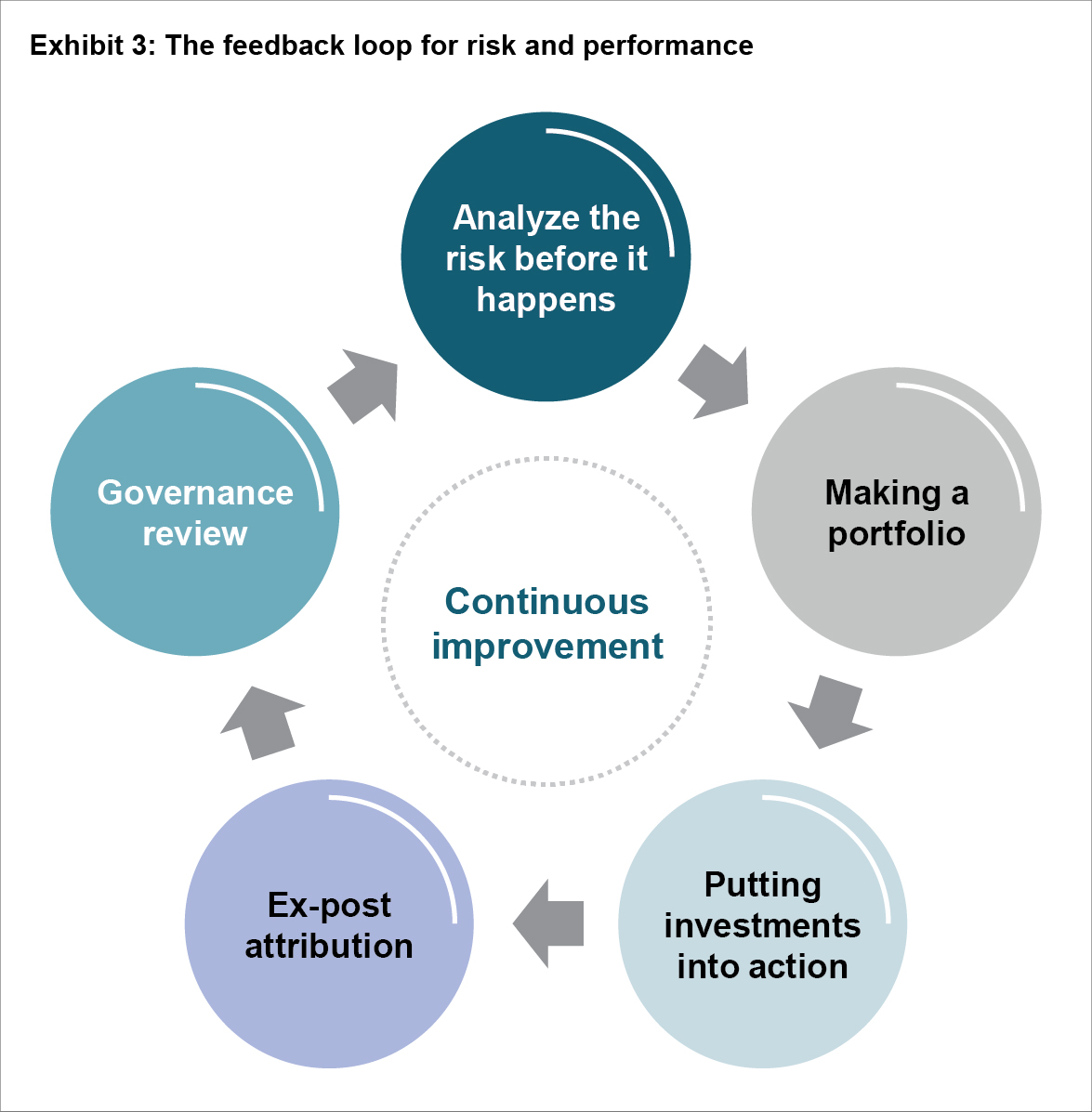
Technology: Older systems designed for simpler portfolio structures struggle with the complexity of today's multi-asset and alternative strategies. Asset managers are investing in platforms that can scale up faster but have strong controls, automation and data lineage features. Full audit trails, flexible data models that can manage diverse sorts of assets and strong computation engines are required.