Explore Crisil, a company of S&P Global
Formerly known as Global Research & Risk Solutions
 Case study
Mitigating credit risks, unlocking efficiency for an MDB through infrastructure and sustainable finance capabilities
Case study

 Share
Share


Background
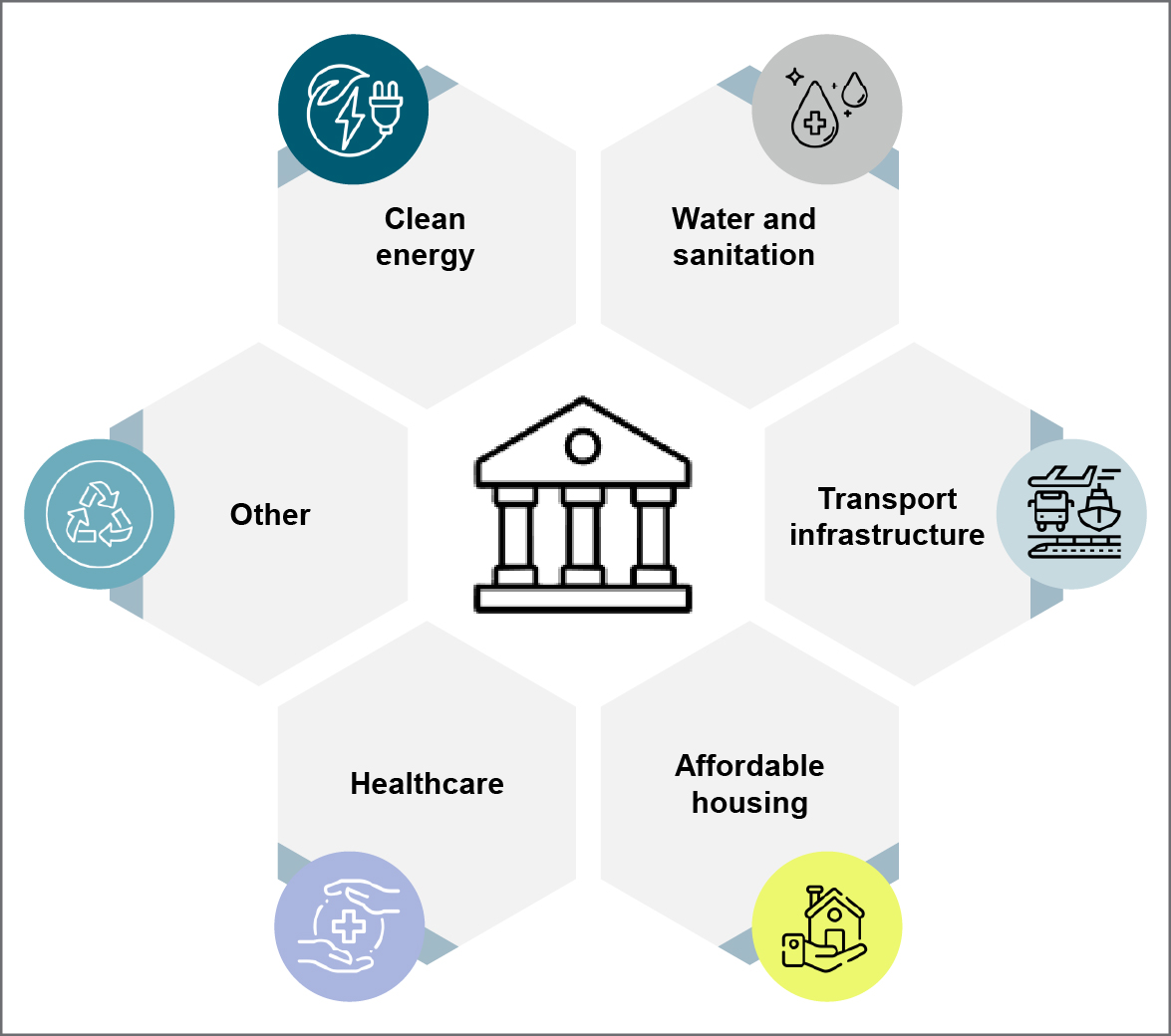
A multilateral development bank (MDB) focussed on clean energy, water, sanitation, transport and other social infrastructure was facing persistent challenges in its credit risk process—both during loan origination and annual reviews. As its portfolio expanded across geographies and sustainability-linked sectors, three issues became increasingly critical:
- Rising pendency in annual reviews in many complex and diverse large-ticket loans, posing asset-quality risks
- The pressing need for in-depth credit assessment during loan origination, given the technical nuances of sustainability-linked projects
- The requirement to analyse transaction structures (to supplement the conventional financial-statement analysis) for risk assessment
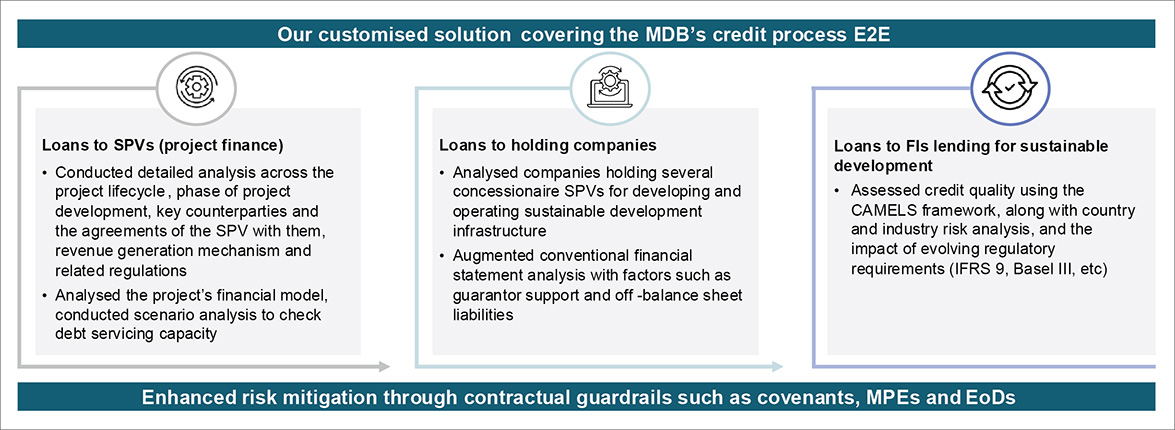
- The MDB’s portfolio comprised loans to special purpose vehicles (SPVs) executing projects in sustainable and socio-economic development, loans to companies holding several such SPVs and loans to financial institutions (FIs) lending towards sustainability goals
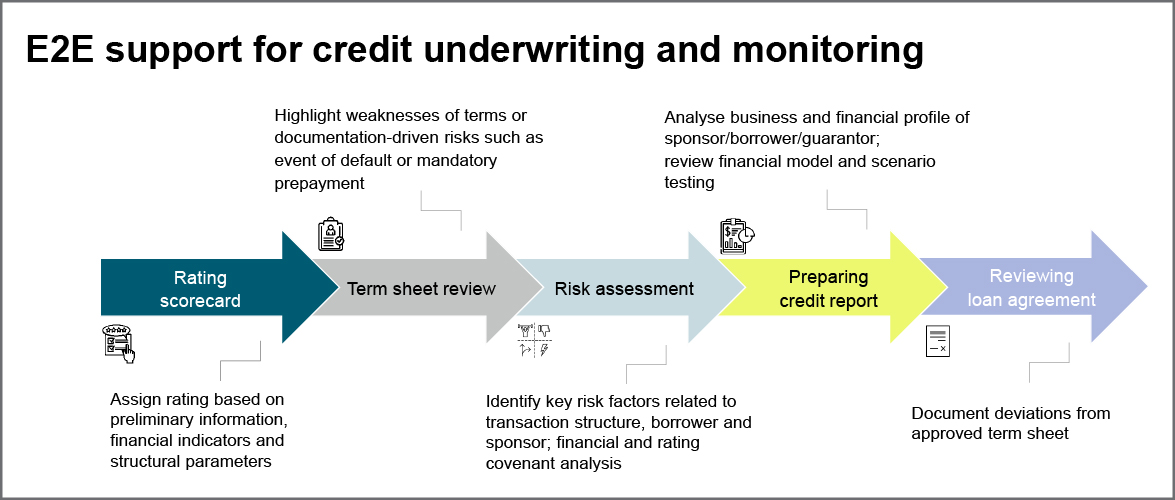
- They needed support for the credit-risk process end-to-end (E2E), including conducting financial spreading, reviewing risks from transaction structures and loan terms, assigning ratings, preparing reports and monitoring portfolio risks
Our solution
- We deployed an experienced team with deep understanding of financing entities engaged in sustainable and social infrastructure activities such as renewable energy, roads, water, transport, waste treatment and hospitals. The team was also adept at analysing the credit risks arising from lending to FIs that financed these sustainability goals. Given the complexity and large-ticket size of such loans, as well as the time-sensitive nature of such analysis, the client relied on us to deliver thorough, structured and timely assessments
- The team supported the MDB across the transaction lifecycle, comprising initial assessment, which involved arriving at a rating based on financial indicators and structural parameters; initial review of loan terms, which involved highlighting lack of guardrails in the documentation; identifying key risk areas related to transaction, borrower and sponsor; due diligence resulting in the preparation of a detailed credit analysis report; and a final review of the loan agreement. The team also worked extensively on loan origination as well as monitoring/reviewing
- For project finance exposures, the team undertook detailed analysis across the project’s lifecycle by examining factors such as the project’s purpose, phase (early-construction, near-operationalisation, post-operationalisation), the nature and strengths/weaknesses of the off-taker entity and key counterparties—including engineering, procurement and construction (EPC) and operation and maintenance (O&M) providers—revenue-generation mechanisms and related regulations, contract terms with counterparties, ring-fencing of cash in SPVs, and technical due diligence reports. The team also evaluated the project’s financial model and conducted scenario analysis under various stress cases to assess the project’s debt-servicing capacity
- For analysis of companies holding SPVs, the team supplemented the conventional deep dive into the financial statements with an evaluation of factors such as guarantor support, off-balance sheet items such as contingent liabilities, holding company’s dependence on its operating subsidiaries and inadequate succession planning
- For loans extended to FIs lending towards sustainability goals, the team used the CAMELS framework for assessment, along with country and industry risk analysis, and the impact of evolving regulatory requirements such as Basel III, IFRS 9, etc., to effectively assess the credit quality
- The team helped the MDB mitigate these risks by augmenting conventional financial statement analysis with appropriate guardrails in the loan terms and conditions such as suitable covenants (financial as well as non-financial), events of defaults (EoDs) and mandatory prepayment event (MPE) triggers designed to address situations where the aforementioned risks become more probable
Impact
The engagement resulted in the client streamlining its credit origination and monitoring processes by standardising the analytical process, and undertake timely and appropriate loan-origination decisions, driven by our end-to-end coverage of their processes, in turn backed by our expertise in infrastructure and sustainable development finance. It also enabled the MDB to decide which entities to lend to, along with facilitating decisions pertaining to risk-based pricing and monitoring the risks arising from outstanding loans, which is very crucial for such complex loans. Our team also reduced the turnaround time and freed up bandwidth for the bank’s credit team, allowing it to focus more sharply on internal processes.