Crisil Mein Pragati
Our Outreach
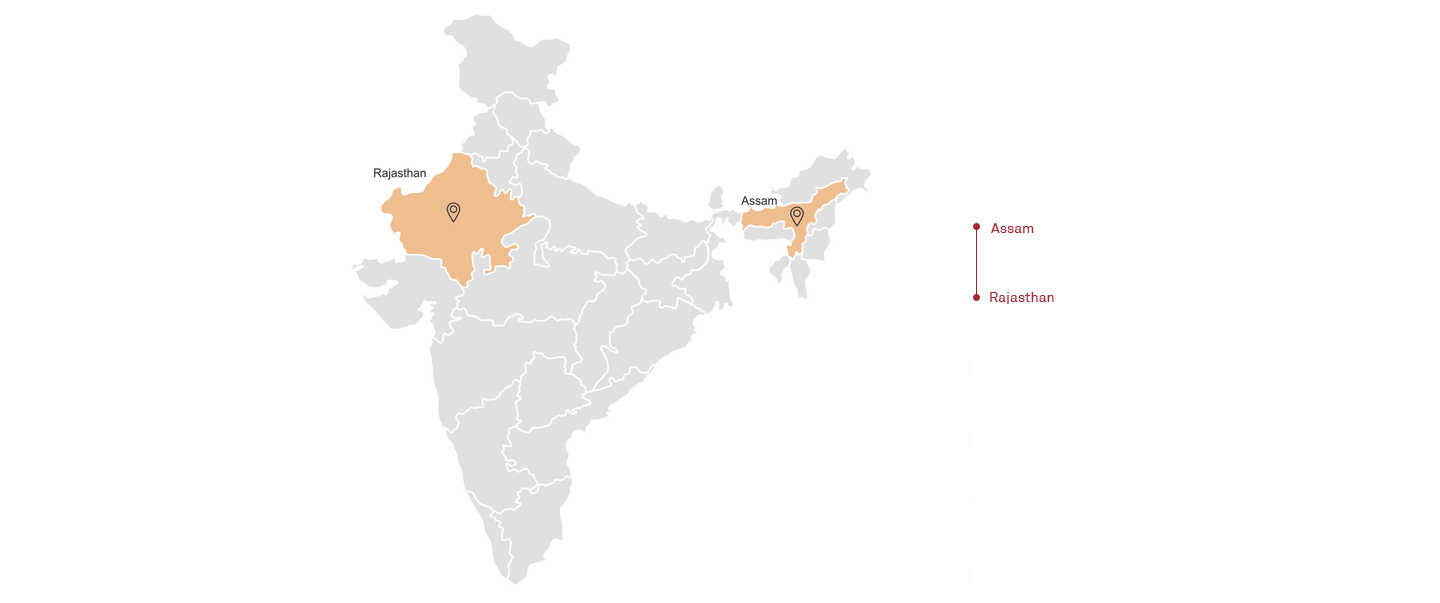
We began our financial inclusion programme with the objective of empowering rural women by strengthening their financialcapabilities.The response to this intervention, its visible impact, and our interactions with community members encouraged us to tap into the need for financial inclusion across gender, age, and geography.
Ergo, Crisil Foundation began customising the Mein Pragati training modulesto cater to rural women across cultures, as also urban women and farmers.
The Mein Pragati footprint
Cumulative Mein Pragati impact footprint (till December, 2024)
The Beginning
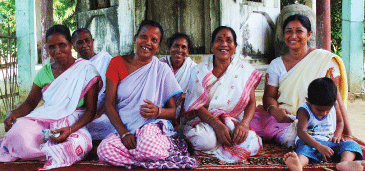

Rural women in Assam
As on date 103,658 women; 10,310 self-help groups
Mein Pragati, Crisil Foundation’s flagship programme for strengthening the financial capability of disadvantaged communities, began with a focus on empowering women in the rural areas of Assam, a state traditionally excluded, mired by multiple socio-economic and geo-political issues affecting the community at large
The objective is to help marginalised rural women gain greater control on their finances, create awareness about the fundamentals of personal finance and empower them to take independent and informed financial decisions. With government initiatives ̶ including the Jan Dhan mission, payment banks and small banks ̶ to strengthen the supply of financial services, the need of the hour is a matching effort to boost demand.
The need for strong grassroots support cannot be stressed enough, for sustainable programme impact. Ergo, Crisil Foundation focuses on continual capacity building for Crisil Mitras, field staff, and village volunteers.
Mein Pragati is being implemented in six districts of Assam, namely, Barpeta, Nalbari, Darrang, Kamrup, Morigaon, and Goalpara.
An independent impact assessment by KPMG’s Social Sector Practice of Mein Pragati in Assam indicated:
- Increased awareness of deposits, general insurance, cattle insurance, pension, and money transfers
- Increased SHG savings
- Reduced expenses on non-essentials
- Increased self-confidence to make financial decisions for the household along with the head of family (vis-à-vis complete lack of awareness before Mein Pragati)
- Pursuing income generating activities such as pickle making, tailoring after saving and monitoring expenditure with the Mein Pragati budget diary
Replication
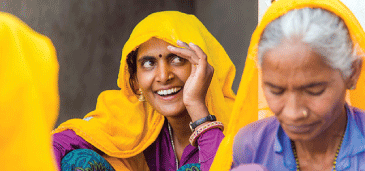
Rural women in Rajasthan
As on date 59,845 women; 5,687 self-help groups
Crisil Foundation expanded its geographical footprint to Rajasthan in May 2016. The programme is being implemented in the state’s eastern region (Alwar, Dausa and Sikar) with an overall outreach goal of 80,000 women by 2018.
Rajasthan, a state with moderate financial inclusion, has a strong focus on rural livelihood, particularly for women. Mein Pragati with its focus on building financial capability for these women is a logical step forward. In addition to Crisil Mitras, Mein Pragati has created community level cadre of volunteers known as Sakhis. The Sakhis are mentored by Crisil Mitras to enable them to act as locally available resource persons for promoting financial awareness and inclusion. Mein Pragati social security melas directly connect programme participants with a range of financial service providers.
Mein Pragati interventions caters to female SHGs. However, it is critical to engage with various stakeholders to create an enabling environment. In Rajasthan – a patriarchal society – the success of a program for women depends on support from men folk along with opinion leaders and community leaders.
Introductory Events in villages at the beginning of each life cycle help establish rapport with the community. SHG members, their families, village elders, opinion leaders, Panchayati Raj Institution (PRI) members and any other villagers thus become aware of Mein Pragati, and acquainted with the Crisil Mitra.
Mein Pragati Social Security Melas (SSM) at the Gram Panchayat (GP) level enable financial linkages for both, participants and non-participants alike. Crisil Mitras and Sakhis (village volunteers) support the attendees to register for linkages or resolve any issues with any of the attending institutions or departments. Such melas enable a substantial spike in financial linkages, as compared to any intervention in the course of the life cycle.
An independent midline assessment by Prime M2i Consulting Pvt. Ltd indicated:
- Increased awareness about managing household budgets, financial planning
- Consequently, high uptake of life and accidental insurance (PMSBY and PMJJBY), and a boost to government schemes such as Bhamashah, Ujjwala and Shramik cards
- SHG members demonstrate better financial habits, and increased confidence while dealing with financial institutions. Instances of financial fraud reported have also reduced significantly, implying increased awareness of authentic formal financial products. Subsequently, SHGs have been revived and become disciplined
Scalability
Financial inclusion in Maharashtra
Depositor Education and Awareness Fund (DEAF) Scheme
Reaching out to small and marginal farmers in Maharashtra: Our programme for farmers’ financial inclusion focuses on: (a) Easing financial distress (b) Preparing them to deal knowledgeably with liquidity shocks (c) Having a greater sense of control over their finances through effective cash-flow management during a crop cycle...
The objective is to help farmers correctly estimate the cash-flow requirement through the crop cycle and plan well, increase awareness of and facilitate financial linkages such as crop loans, Kisan Credit Card, loans related to agriculture and agrobased activities, and government-run schemes.
Reaching out to urban women in Maharashtra: Our urban financial literacy programme focuses on disadvantaged women from communities in Mumbai. We conducted extensive field visits and preliminary research within pockets categorised as economically weaker sections in Mumbai.
With insights into informal structures within the social fabric, we adapted our existing facilitation modules to help participants assess risks related to sources of debt (especially those traditionally considered reliable) and investments, understand the power of compounding and monthly saving deposits, and emphasise timely premium payments. After extensive pre-testing, Crisil Foundation developed a participatory training toolkit, and trained Master Trainers from among marginalised communities.
Reaching out through community radio in Uttarakhand
We are leveraging a new medium of communication to reach out to the remote district of Rudraprayag in Uttarakhand. To create financial awareness and drive financial inclusion, Crisil Foundation is broadcasting a series of radio programmes to develop financial capabilities.
We are implementing the project through a local radio station Mandakini Ki Awaaz, a Community Based Organisation, broadcasting programmes on 90.8FM. The radio shows, targeting youth, women, men, and senior citizens reaches out to a captive audience of 300,000 listeners across 330 villages in Rudraprayag District and three blocks - namely Augustyamuni, Jakholi, and Ukhimath.
The content is developed based on findings from a baseline study. The intervention includes a combination of quizzes, phone-based interaction with experts, interviews with experts, and radio dramas focusing on messages to bring about attitudinal and behavioural changes towards household and personal finance management.
Strengthening institutional infrastructure in Central and Northern India
Our programme for women, poor landless and farming households, in Madhya Pradesh and southern Rajasthan has been designed to strengthen the financial capabilities of SHGs and individuals, for sustainable impact through the: (a) Creation of an enabling and nurturing environment (b) Active engagement to build financially sustainable institutions such as SHGs and federations... (c) Creation of a pool of skilled human resource at the community level for guidance and handholding support related to health, education, and personal finance
Collaborating with the Reserve Bank of India (RBI)
Depositor Education and Awareness Fund (DEAF) Scheme
The RBI empanelled Crisil Foundation to conduct programmes under the Depositor Education and Awareness Fund Scheme. All agencies empanelled for this purpose are expected to raise awareness about:
Bank facilities, related products and services
Redressal mechanisms
Rights and entitlements
Enhancing understanding about processes
to avail of financial products and services.
Centre for Financial Literacy (CFL)
The RBI commissioned a pilot on financial literacy at the block level through CFLs. The central bank has assigned Crisil Foundation 20 Blocks in Haryana and Maharashtra, in collaboration with sponsor banks. We will set up a total of 10 centres in each state to strengthen the financial capabilities of socially and economically underprivileged communities within the given intervention Block. The project will focus on women, small and marginal farmers, youth and small scale enterprises.
CFL has a three-year intervention period, with a goal to bring about sustained financial awareness, and create positive financial behaviour at the block level.
The pilot project will focus on the following to increase knowledge and awareness in communities:
- Active saving and good borrowing
- Financial planning and goal setting
- Digital financial awareness, and
- Consumer protection
Over three years, CFLs will:
- Increase awareness about banking products and services
- Increase uptake of banking products and services such as deposits
- Increase formal credit and insurance and positive financial behavior change
- Improve credit behavior
- Disseminate knowledge about rights and grievance mechanisms
- Enable a trained resource pool at the community level to promote awareness and facilitate banking services
Key achievements (till date)
- More than 160,000 community members directly reached during training and awareness camps
- Over 30,000 linkages to formal financial products and services facilitated in both states, indicating latent demand for formal banking products, services and other financial institutions at the block level
Livelihood
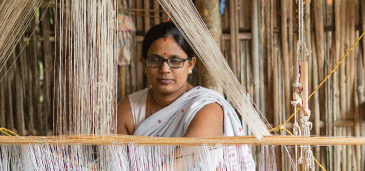
Livelihood promotion (pilots in Assam and Rajasthan)
Financial independence and livelihood opportunities go together and hence, Crisil Foundation, in 2018 initiated a few livelihood pilots (on a small scale) in Assam.
Starting with 75 households in 2018, they gained steady momentum through enhanced household coverage, and improved income generation for over 1,500 households by 2021.
Focused interventions in 2022 enabled a tangible expansion in outreach and impact to over 2,000+ households.
These included:
- ERI rearing in Kamrup: Creation of Eri Resource centres for collective marketing of Eri Silk and convergence of beneficiaries with ASRLM promoted Producer Groups
- Handloom and loom upgradation in Kamrup: Upskilling and sustaining the weaver entrepreneurs through loom upgradation, linkage with the State Rural Livelihood Mission and NABARD’s livelihood and enterprise development programme.
- Farming and Agro-Hub in Nalbari and Goalpara: Creation of Agro-farming Hub as a community-based institution of women farmers, to promote collectivization, market linkages and sale of produce.
Similarly, in 2023, a pilot was launched in Rajasthan with Jaipur Rugs Foundation – in order to upskill and train over 35 women weavers in Didwana village, Dausa over a 6-month period.
Currently, ongoing livelihood pilots in Assam and Rajasthan include the loom upgradation (with select cohorts) and rug-weaving.