- Credit Portfolio Analytics
- AI-Powered Credit Dashboards
- Credit Monitoring Automation
- Portfolio Risk Management
- Real Time Credit Analytics
- Predictive Analytics in Lending
Beyond spreadsheets: The new era of credit portfolio analytics
Tech-powered sharper insights, faster responses



Seema Joshi
Global Head of Operations
Credit and Lending Solutions

Animesh Pandey
Sector Lead
Credit and Lending Solutions

Bhumika Malpani
Lead Analyst
Credit and Lending Solutions
Credit portfolio analytics as a strategic imperative
As financial institutions navigate an ever-changing landscape of regulatory shifts, economic turbulence and geopolitical uncertainty, credit portfolio analytics is evolving from a back-office function to a strategic cornerstone.
The function is not just about monitoring risk anymore - it is also about enabling smarter origination, faster decisions and more agile capital deployment.
Several external pressures are accelerating this shift:
- Implementation of Basel III capital requirements: With the 2025 updates, banks face a material increase in required capital holdings, translating into billions in additional compliance costs. This has forced institutions to rethink capital allocation, portfolio optimization and risk transfer frameworks.
- Exposure to market volatility: Banks are becoming increasingly vulnerable to geopolitical shocks and contagion risks, where stress in one market or counterparty can rapidly spill across portfolios.
- Liquidity pressures from economic dislocation: Ongoing interest rate hikes, margin calls and economic slowdown fears have made it harder to hedge exposures effectively. Highly leveraged borrowers with weak balance sheets are particularly at risk, posing systemic liquidity challenges for regional and mid-sized banks
- Renewed emphasis on portfolio resilience: Today’s evolving risk landscape demands a more dynamic, analytics-driven approach to monitor concentration risk, diversify exposures and maintain regulatory alignment
The current landscape introduces new threats that may not come under the ambit of the structural reforms enacted after the 2008 Global Financial Crisis and the 2010 European sovereign debt crisis. Geopolitical uncertainty and regulatory noncompliance are now at the forefront of systemic risk, reinforcing the need for a more forward-looking, analytically advanced approach to credit portfolio management.
External storm: Geopolitical uncertainties
The global financial system has become more vulnerable to geopolitical issues in recent years, threatening the stability and risk management of banks' credit portfolios.
Heightening geopolitical tensions pose risks to banks with exposure to developing markets. That said, they also unlock opportunities for expansion into new markets, such as Vietnam, Thailand and Mexico.
Some European banks are developing their operations in China and larger banks are experiencing increased demand for advisory services to navigate global uncertainties.
Moreover, the change in the US administration after the 2024 elections is leading to a paradigm shift in tax policies, trade relations, climate change initiatives, diplomatic relations with Asian countries (notably India) and financial sector regulations, which is impacting European banks and their operations.
Compliance headwinds: Regulatory non-compliance and capital strain
According to a Fitch credit risk survey, banks encountered significant regulatory challenges in 2021 following the Covid-19 Pandemic, incurring ~$32.3bn in fines for non-compliance.1
There has been a tightening of regulatory scrutiny due to concerns over banks’ lending practices, risk management cycles and overall financial stability. Notable examples include:
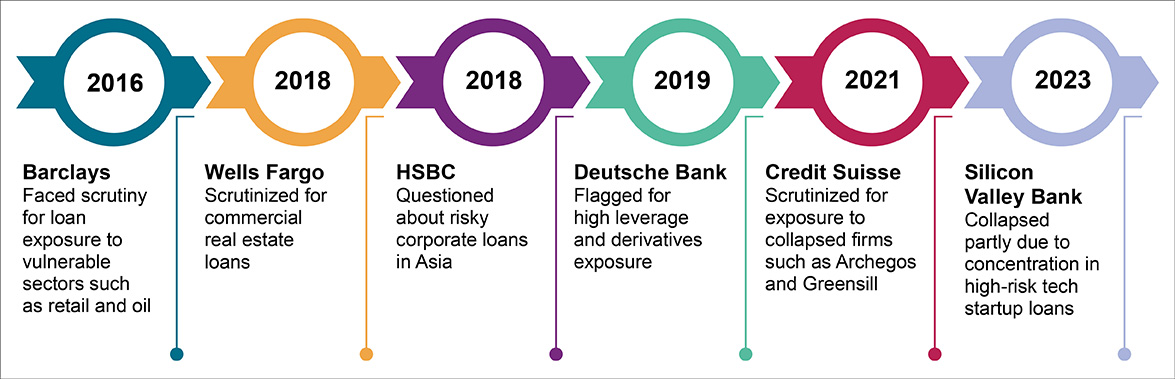
However, one bank that demonstrated resilience during the pandemic associated regulatory tightening was BNP Paribas. The bank’s internal rating approach and macroeconomic stress-testing framework helped it comply with regulatory andinvestor requirements. Through active portfolio management, BNP’s corporate performance management team achieved €6 billion in risk-weighted asset savings in 2020, despite unprecedented drawings on revolving credit facilities (~€28 billion).
Implementation challenges in scaling credit portfolio analytics
Banks are increasingly implementing machine learning (ML) models for credit scoring, reporting and monitoring, early warning signals and credit pricing. The adoption of credit portfolio analytics faces several challenges, including data quality assessment, talent availability and validation with explaining new techniques.
These challenges stem from limited resources, inadequate technological capabilities and insufficient expertise. A few challenges are discussed below.
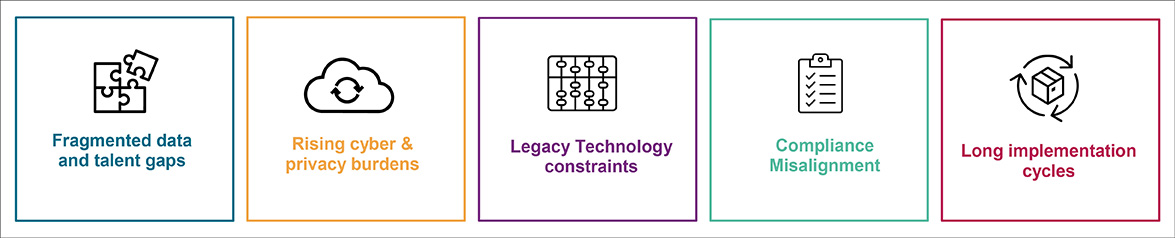
- Fragmented data and talent gaps: Unstructured data and shortage of analytics expertise make it hard to extract reliable insights. Most institutions grapple with incomplete datasets and lack internal capabilities to interpret outputmeaningfully
- Rising cyber and privacy burdens: Ensuring cybersecurity and compliance with data privacy laws such as GDPR introduces operational friction and adds complexity to analytics design and execution
- Legacy technology constraints: Outdated systems and high infrastructure costs prevent small and mid-size banks from adopting advanced credit portfolio tools or automating insights at scale
- Compliance misalignment: Meeting Basel III and local regulatory mandates often require dedicated resources. Many banks lack the bandwidth to align analytics with compliance, increasing the risk of regulatory penalties
- Long implementation cycles: Delay decision-making and reduce organizational agility, especially in a fastchanging credit and market environment
Addressing these challenges often requires a combination of external partnerships, strategic investments in technology and an internal cultural shift towards data-driven decision-making. By conducting a thorough risk assessment, organizations can not only boost revenue and safeguard their reputation but also unlock a multitude of additional benefits. Partnering with financial services platforms can drive digital transformation, leading to a wide range of business advantages that extend beyond risk management, propelling overall growth and success.
The new frontier: Advanced technologies for powering credit analytics
- Rise of AI and ML: Larger banks are increasingly adopting advanced technologies such as ML and artificial intelligence (AI) to manage vast datasets and enhance credit risk practices. However, smaller, mid-sized and some larger banks still rely on traditional and alternative data sources for credit risk information.
A 2022 survey by McKinsey2 and the International Association of Credit Portfolio Managers (IACPM) found that over 60% of participating financing institutions had increased their use of novel data types and cutting-edge technologies, including ML and AI, for advanced credit portfolio management.
- Natural language processing (NLP) for borrower signal extraction: Banks are leveraging diverse data sources, including alternative data, to improve their credit portfolio management. In the corporate sector, innovative externaldata sources are gaining traction, while small and medium-sized enterprises are utilizing internal data sources more extensively. Several use cases of many top companies3 highlight NLP’s influence on Banking and Finance field - Morgan Stanley, Bank of America, JPMorgan Chase, Bloomberg and Grammarly are leveraging AI and NLP to transform the way of working with information. Morgan Stanley uses OpenAI to analyze research reports, Bloomberg utilizes NLP for news summarization, JPMC uses AI-driven fraud detection models leveraging NLP to analyze borrower patterns, and Grammarly offers tools for error correction and writing enhancement. These innovative tools are making information work faster and more efficient and effective. According to several research platforms, by 2025, 30% of NLP applications will be in banking, financial services and insurance, transforming the industry with automated loan and credit applications, fee calculations, customer onboarding, risk management, asset management and compliance, making finance faster, smarter and more efficient.
From insights to action: AI-powered dashboards for real-time monitoring
- Shift from static reports to interactive dashboards: Banks are leveraging credit portfolio analytics for informed decision-making, rather than relying solely on internal reports and models. Interactive dashboards have become crucial in streamlining this process. As credit portfolio analytics gain traction, its implementation varies across institutions. Here are a few samples on how they differ across institutions.
Real-world samples of dashboards across credit risk and portfolio management categories
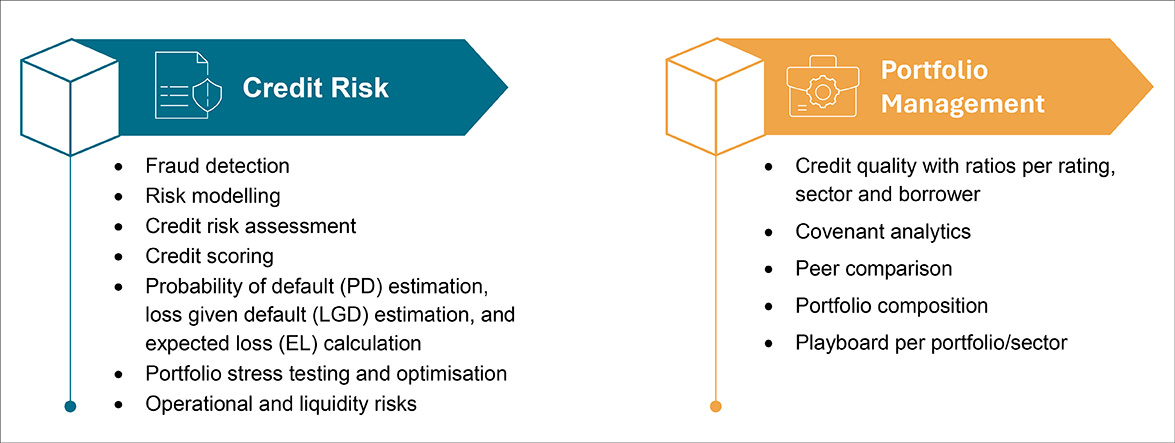
Examples of dashboarding tools across different banks
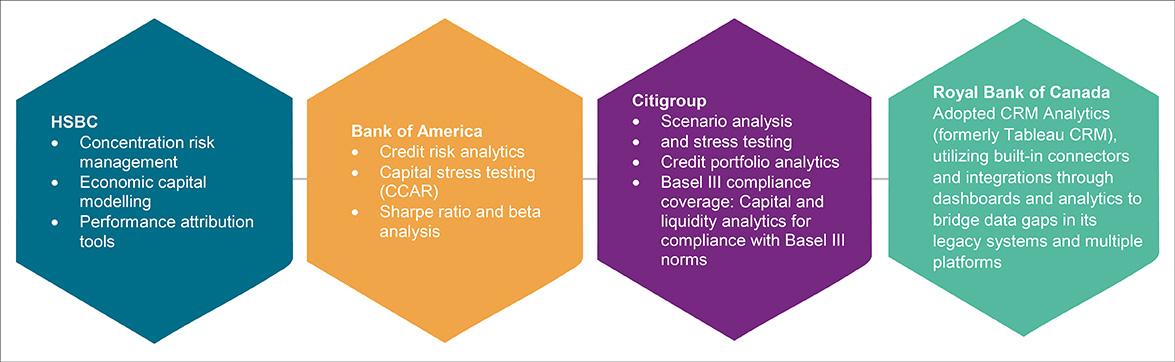
Intuitive dashboards enable institutions to create actionable insights by combining their internal data with external sources, transforming raw data into actionable intelligence, offering stakeholders a bird's-eye view that facilitates informed decisionmaking.
However, building a traditional dashboard involves several time-consuming and labor-intensive steps, including:
- Data collection and preparation: Gathering data from multiple sources, cleaning and organizing them into a usable format
- Manual setup: Designing the dashboard layout, selecting key metrics and configuring filters and visualizations
- Continuous maintenance: Regularly updating data sources, ensuring compatibility and refining the dashboard over time
These steps require significant time, technical expertise and often a dedicated team of analysts and developers. Furthermore, traditional dashboards have various limitations. For one, they are static and only show pre-defined data. Moreover, they cannot proactively uncover hidden patterns or trends and require manual effort to identify insights and make data-driven decisions.
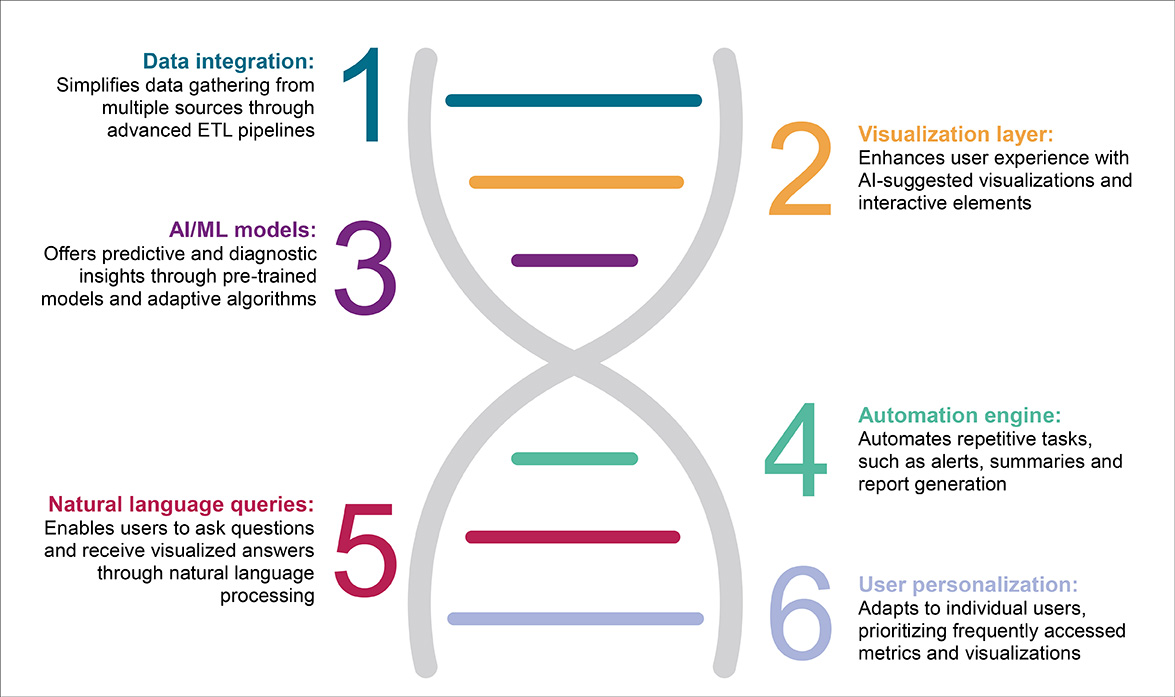
The integration of AI in workflows has led to evolution of AI-powered dashboards which provide more than just data visualization. They offer advanced analytics and interpretation capabilities, empowering informed decision-making. They also optimize data management, fast-track digitization and reduce manual data collection and reporting time, while also enhancing cost efficiencies.
Some of the key tools currently being used include real-time KPI monitoring, advanced analytics, streamlined data interpretation, scalability, customizable alerts, stress testing and early warning systems.
Key components of AI-powered dashboards
In a nutshell
To stay competitive in a rapidly evolving financial landscape, banks - from regional to global - must continuously balance risk and return with precision. This demands a deep understanding of markets, economies and borrower behavior. Modern credit portfolio analytics, powered by AI and advanced modeling, are enabling this shift. By integrating data across portfolios, automating manual processes and tapping into digital insights, banks can enhance decision-making, manage risk more effectively and generate actionable insights at scale through:
- Holistic risk assessment: AI-powered dashboards help quantify and monitor risk exposure in real-time across borrowers and sectors
- Data-driven diversification: Leveraging income group data and performance insights improves portfolio resilience and returns
- Operational efficiency: Automation minimizing manual intervention and enhances reporting accuracy and speed
- Strategic pattern recognition: Digital tools that detect trends and anomalies across portfolios, enabling proactive management
Sources
1 Top 10 Use Cases of Data Analytics in Banking
2Data and analytics innovations to address emerging challenges in credit portfolio management
3NLP Capabilities in Banking & Finance: 7 Use Cases to Consider
Subscribe to our blogs